Last updated: August 13, 2026
A semi-automatic espresso machine sits in the middle of the espresso world, and the name confuses almost everyone who meets it for the first time. It does not mean half automatic in the sense of doing half the work. It means the machine handles the pump and the pressure while you handle the coffee: you grind, you dose, you tamp, and you decide when the shot starts and when it stops. That single division of labor is why this category has been the default for home espresso for decades.
This guide explains what you actually do at a semi-automatic machine, where the meaningful differences hide (heating system, temperature control, portafilter size, steam power), and which widely available models keep coming up when people describe what they wish they had bought first. It also covers the honest case for skipping this category entirely, because for some households the fully automatic route is the right call.
This article contains affiliate links. If you buy through them, we may earn a commission at no extra cost to you. Learn more.
Quick Answer
Which semi-automatic espresso machine is right for you?
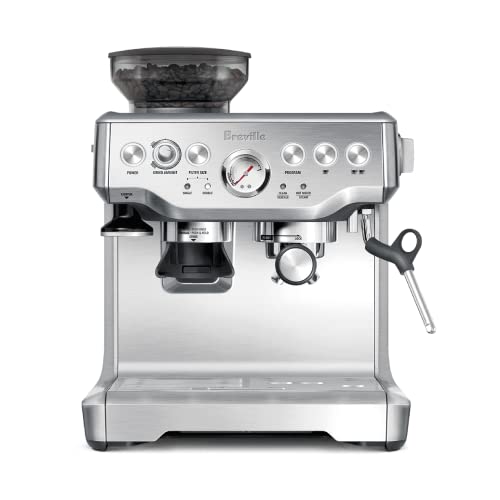
- For a complete setup in one box, the Breville Barista Express bundles a burr grinder, a PID-controlled thermocoil, and a 54mm portafilter, so nothing else is required on day one.
- For the classic route into real espresso, the Gaggia Classic gives you a commercial 58mm portafilter and a single boiler, and it is built to be tinkered with.
- If you want minimal counter space, the Breville Bambino delivers the same hands-on workflow in a much narrower body.
What You Do and What the Machine Does
The clearest way to understand semi-automatic is to lay the espresso workflow out step by step and mark who owns each step. On a semi-automatic machine, everything before the shot belongs to you, the machine owns pressure and temperature during the shot, and the stop is yours again. That is the whole definition, and it explains both the learning curve and the appeal.
| Step | Semi-automatic | Super-automatic |
|---|---|---|
| Grinding | You grind, or the built-in grinder does it on your settings | Machine grinds on every drink automatically |
| Dosing | You weigh or measure the dose into the basket | Machine doses internally |
| Tamping | You tamp by hand | Machine compresses the puck internally |
| Shot start and stop | You start it, you stop it (or set a volumetric preset) | Machine runs a programmed cycle |
| Milk | You steam and texture with the wand | Automatic milk system, wand optional |
| Cleanup | Knock the puck out, rinse, wipe the wand | Automated rinse cycles, dump the grounds bin |
Two variations sit beside this category. Manual lever machines hand you the pressure too, a different craft covered in our manual espresso machine guide. Automatic machines are simply semi-automatics with a volumetric shot stop.
Thermoblock, Single Boiler, or Dual Boiler
Heating is where semi-automatic machines separate into tiers. A thermoblock or thermocoil heats water on demand as it passes through a heated metal block, which is why those machines are ready in seconds. A single boiler holds a volume of water and switches between brew temperature and steam temperature, so you brew first, then wait for the boiler to climb before steaming. A dual boiler keeps two separate boilers at their own temperatures, so brewing and steaming happen at the same time.
For one or two drinks a day, a good thermoblock with proper temperature control is genuinely sufficient. Single boilers reward patience and give strong steam once they get there. Dual boilers eliminate the wait and hold temperature best over a session, which is why they dominate the enthusiast tier. If that last group is where you are headed, our dual boiler espresso machine guide explains what the second boiler really changes.
PID: The Feature Worth Understanding
A PID is a temperature controller. Instead of a mechanical thermostat that switches the heater on and off within a wide band, a PID continuously adjusts the heating element to hold a target temperature much more tightly. In practice that means shot-to-shot brew temperature varies less, which removes one of the biggest sources of inconsistency for a home barista.
PID control has spread downward and now appears well below the enthusiast tier. It is not magic: it cannot fix an uneven tamp or an inconsistent grinder, and machines without one have made excellent espresso for decades using timing routines instead. But between two similar machines it is a reasonable tiebreaker, especially with lighter roasts, where brew temperature shows up clearly in the cup.
The 58mm Standard and Why It Matters Later
Portafilter diameter is the spec that shapes your accessory options for as long as you own the machine. The 58mm size is the commercial standard, so tampers, distribution tools, precision baskets, bottomless portafilters, and puck screens are easiest to find in that size and easiest to move between machines. Breville’s home espresso line standardized on 54mm and has a solid accessory market of its own. Entry-level machines at 51mm have the thinnest selection.
This is not a quality ranking. Excellent espresso comes out of 54mm baskets every day. It simply means that if part of the appeal here is upgrading pieces over time, 58mm gives you the widest field to shop in. Our roundup of the best espresso tampers covers how to match a tamper to your exact basket, which matters more than the handle material.
Our Top Picks at a Glance
How we chose: we compared the widely available semi-automatic machines on heating system and temperature control, portafilter size and accessory support, steam capability, build quality, and the themes that repeat across owner feedback. Selections lean on manufacturer specifications and recurring patterns in user reviews rather than any hands-on trial of our own.
One reassurance before the list: every machine here uses a real portafilter and a real steam wand, so the skills you build on one transfer to the next.
🏆 Best Overall
The all-in-one that made this category approachable: a conical burr grinder built into the body, a dose and tamp station on the front, PID temperature control, and a 54mm portafilter with pressurized and non-pressurized baskets. Owners consistently describe it as the machine that let them skip buying a separate grinder while still learning the real workflow.
🔧 Best Classic Route
A commercial 58mm portafilter, a single boiler, a three-way solenoid valve that leaves a drier puck, and a metal body that has been serviced by home users for decades. It ships without PID, which is precisely why it has one of the largest modification communities in home espresso. The choice for people who want a machine to learn on and keep.

📏 Best Compact Semi-Automatic
The same hands-on workflow in a body narrow enough for a small kitchen, with a thermojet system that reaches brewing temperature in seconds and a steam wand capable of proper microfoam. Pair it with a separate grinder and you have a serious setup in very little space. More options in our compact espresso machine guide.

Picks by Situation: Steam Power, Tight Budgets, Upgrades
The three above cover most buyers, but this category rewards matching the machine to how you drink and how much you want to fiddle. These three fill the gaps.
🥛 Best for Milk Drinks and Longevity
A commercial-style single boiler machine with a 58mm portafilter, a brass boiler, and a steam wand that has a reputation for output well above its class. The trade is patience: you brew, then wait for the boiler to reach steam temperature. Widely regarded as one of the most repairable home machines on the market.

💵 Best Budget Pick
A simple manual machine with a pressurized basket and a steam wand, no display and no automation. It will not satisfy anyone chasing a perfect extraction, but it is an honest, low-commitment way to find out whether the espresso routine suits you. See the wider field in our budget espresso machine roundup.

⭐ Upgrade Pick
Two independently controlled stainless boilers with PID, a 58mm portafilter, programmable pre-infusion, and steam on demand while the shot is running. This is the machine people move to when waiting between brewing and steaming becomes the thing they resent most. Details in our dual boiler guide.

The Grinder Is Half the Machine
Espresso is the most grind-sensitive brewing method in the kitchen, and a semi-automatic machine offers you no protection from a bad grind. The pump pushes water through a compressed puck, and if the particles are uneven the water finds channels and the shot runs fast and thin. This is why experienced buyers repeat the same advice: an entry machine with a good grinder usually beats an expensive machine with a poor one.
What you need is fine adjustment near the espresso range, in steps small enough to chase a target shot time instead of jumping past it. Burr grinders do this, blade grinders do not. Our manual coffee grinder roundup covers which hand grinders adjust finely enough for espresso if counter space is tight.
Dialing In: A Simple Starting Routine
Most people find their footing faster with a repeatable routine than with a chase for perfection. A common starting point is a ratio in the neighborhood of 1:2, meaning roughly twice as much liquid espresso out as dry coffee in, pulled over something in the range of 25 to 35 seconds from the moment the pump starts. Those are starting points, not rules, and different coffees land in different places.
From there, grind is your main lever. If the shot runs too fast and tastes thin and sour, grind finer. If it crawls and tastes harsh and bitter, grind coarser. Change one variable at a time and keep the dose fixed while you do. A scale makes this dramatically easier, since guessing at dose and yield turns three variables into noise; our coffee scale guide covers which features are worth having for espresso.
Common Mistakes to Avoid
- Spending the whole budget on the machine. A grinder that cannot adjust finely enough will cap what any semi-automatic machine can do. Split the budget deliberately.
- Judging the machine on the first week. Dialing in a new coffee takes several shots. Early disappointment is usually a grind problem, not a machine problem.
- Leaving a pressurized basket in permanently. Pressurized baskets create crema artificially and mask grind quality. Once your grinder is up to it, move to the non-pressurized basket.
- Skipping the steam wand purge. Purge before and after steaming and wipe the wand right away. Dried milk in the tip is far harder to remove later.
- Ignoring water and descaling. Scale is the leading cause of failure in home espresso machines. Filtered water plus the manufacturer’s descaling schedule prevents most of it.
Where to Go From Here
If the workflow described above sounds like a chore rather than a ritual, that is useful information: the fully automated alternative is covered in our super-automatic espresso machine guide, where the machine grinds, doses, tamps, and brews on its own. If budget is the binding constraint, the tier guides map the field honestly, starting with the best espresso machines under $500 and the best espresso machines under $1000. And if you already own a Breville and just want it to keep performing, our walkthrough on descaling a Breville espresso machine covers the maintenance that most owners postpone too long.
Frequently Asked Questions
What does semi-automatic actually mean? The machine controls the pump and pressure, you control everything else: grinding, dosing, tamping, and when the shot starts and stops. Fully automatic machines run a programmed cycle instead, and manual lever machines hand you the pressure as well.
Is a semi-automatic machine hard to learn? There is a real learning curve, mostly around grind adjustment. Most people get to a consistently enjoyable shot within a few weeks of regular use, faster with a scale and a grinder that adjusts finely.
Do I need a machine with PID? No, but it helps. PID holds brew temperature in a tighter band than a mechanical thermostat, which removes one variable while you work on the others. Plenty of well-loved machines have no PID from the factory.
Is 58mm better than 54mm? Not in the cup. It is the commercial standard, so accessories are easiest to find in that size. Breville’s 54mm line has a healthy accessory market of its own; our tamper guide covers matching sizes.
How long should a shot take? Many people start by aiming for roughly 25 to 35 seconds for a ratio near 1:2, then adjust to taste. Treat it as a reference point rather than a target to hit exactly.
The Bottom Line
A semi-automatic espresso machine gives you the pump and the pressure and leaves the coffee decisions to you, which is exactly why it remains the standard for home espresso. The Breville Barista Express is the easiest complete start, the Gaggia Classic is the classic route into 58mm gear you can keep upgrading, and the Breville Bambino delivers the same workflow in far less space. Whichever you pick, budget for the grinder in the same breath.