Last updated: August 13, 2026
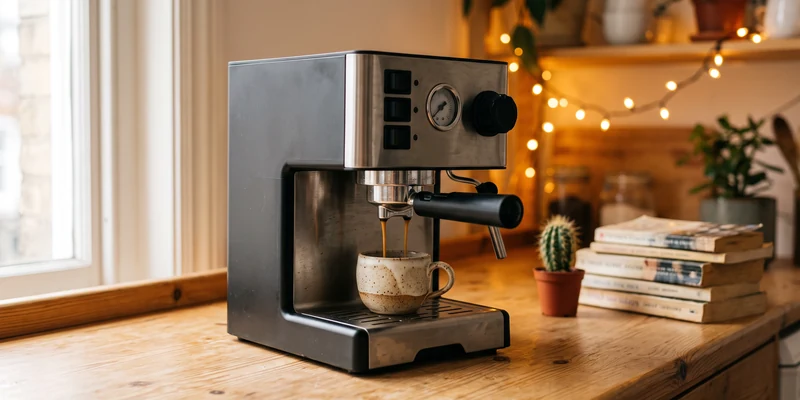
A budget espresso machine is the most misunderstood appliance in the coffee aisle. Shoppers expect a small cafe on the counter, and what they get is a compact pump, a thermoblock heater, and a portafilter that has been engineered to forgive a mediocre grind. That is not a scam, it is a design choice, and once you understand it the entry tier suddenly makes sense.
This guide explains what your money actually buys at the bottom of the espresso market, which compromises are harmless and which ones will annoy you every morning, and how to spend the smallest possible amount without ending up with a machine you abandon after three weeks. Every recommendation below stays inside the entry bracket, and the cross-links at the end point you upward when the ceiling starts to bother you.
This article contains affiliate links. If you buy through them, we may earn a commission at no extra cost to you. Learn more.
Quick Answer
Which budget espresso machine should you buy?
- For the lowest sensible entry point, a manual pump machine like the De’Longhi Stilosa gives you a real portafilter and a real steam wand without extras you would not use.
- For tight counters, the De’Longhi Dedica is one of the slimmest pump machines sold, and it heats fast enough for a weekday routine.
- Budget your grinder before your machine. In this price range, the grinder is the single biggest lever on how the coffee tastes.
What a Budget Espresso Machine Actually Buys You
At the entry level you are buying a pump, a fast heater, and a forgiving basket. You are not buying temperature stability, a commercial group head, or the ability to steam milk and pull a shot at the same time. The table sorts the entry market into the four shapes it actually comes in, so you can spot which one is sitting in front of you.
| Machine shape | Typical example | What it does well | The catch |
|---|---|---|---|
| Steam driven | Old-style steam espresso makers | Cheapest possible entry, makes strong coffee | Not true espresso pressure, thin crema, hard to control |
| Entry pump | De’Longhi Stilosa | Real portafilter, real steam wand, simple to learn | Pressurized basket, small boiler, slow steam recovery |
| Slim thermoblock | De’Longhi Dedica | Very narrow footprint, quick heat-up | Small drip tray and water tank, pressurized baskets standard |
| Upgradable classic | Gaggia Classic | Commercial size portafilter, parts and mods available | Sits at the top of the budget bracket, needs a real grinder |
Most people shopping the entry tier end up in rows two and three, and both can make genuinely enjoyable coffee. Row four is where the bracket blurs into the next one, which is covered in our guide to espresso machines under $500.
Pressurized Baskets: The Compromise That Defines the Tier
Almost every machine in this price range ships with a pressurized, sometimes called dual wall, filter basket. It has a tiny restrictor hole behind the visible screen that creates back pressure artificially, which means the machine can produce a crema-topped shot even when your grind is far too coarse and your dose is casual. That is genuinely useful for beginners.
The trade-off is a ceiling on flavor. Because the puck is not doing the work, you lose most of the control that makes espresso interesting, and shots tend to taste flatter and slightly bubbly no matter how good your beans are. Some entry machines let you swap to a single wall basket later, which is the cheapest meaningful upgrade in the whole category, but it only pays off once your grinder can produce a fine, consistent grind.
Your Grinder Matters More Than Your Machine
If you take one thing from this guide, take this: at the bottom of the market, the machine sets the ceiling and the grinder decides how close you get to it. Pre-ground supermarket espresso is milled for a broad audience and cannot be adjusted, so it locks you into whatever the bag decided. A burr grinder with fine adjustment near the espresso end of its range unlocks the difference between sour, bitter, and balanced.
Blade grinders are the false economy here. They chop rather than mill, which produces a mix of dust and boulders, and espresso is the brewing method least tolerant of that. If the total budget is fixed, a modest machine with a decent burr grinder consistently beats a fancier machine with no grinder at all. Our roundup of manual coffee grinders covers the hand-powered route, which punches well above its cost for one or two shots a day.
Our Top Picks at a Glance
How we chose: we compared entry machines on portafilter size and basket type, heat-up behavior, steam wand usability, footprint, and the recurring themes in owner feedback. Selections lean on published specifications and long-running review patterns rather than any hands-on trial of our own.
All three below are pump machines with a real portafilter and a real steam wand, which is the minimum worth buying if espresso is the goal.
☕ Best Overall
The De’Longhi Stilosa keeps the entry formula honest: a pump, a portafilter, a manual steam wand, and almost nothing else to break. Owners consistently describe it as the machine that taught them the basics without a painful outlay.

📏 Best for Small Counters
The De’Longhi Dedica is one of the narrowest pump machines on the market, with a thermoblock that reaches brewing temperature quickly. A strong fit for apartment kitchens where width is the real constraint.

🥛 Best All-in-One Starter
Casabrews sells a popular family of compact stainless machines that bundle a pump, a steam wand, and often a milk pitcher, which makes them a tidy single purchase for a first setup.

If You Want Milk Drinks Every Morning
Steam performance is where the entry tier shows its limits most clearly. Small single boiler and thermoblock systems need a moment to switch from brewing to steaming, and the wands are typically single hole designs that ask for patience rather than technique. That is workable for one latte, and tiresome for four in a row.
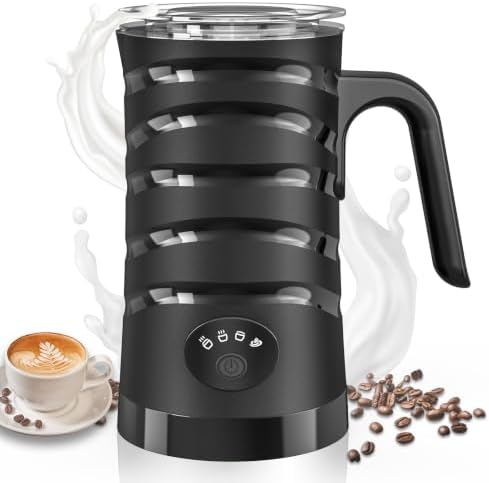
Two routes solve it. Either accept the wait and learn the machine’s rhythm, or separate the jobs entirely with a standalone frother, which also gives you cold foam options that no entry steam wand can produce. Our guide to milk frothers for cold foam covers that second route in detail.
🔧 Upgrade Pick
The Gaggia Classic sits at the ceiling of the budget bracket and behaves like a machine from the tier above: a commercial size portafilter, a metal build, and an unusually deep supply of spare parts and community modifications.

🫧 Also Great for Milk
A separate electric milk frother takes the steam wand out of the equation, handles hot and cold foam, and lets a modest machine focus on doing one thing at a time.
Living With a Budget Machine
Small machines reward small habits. Run a blank shot of water through the group before you brew so the head and the basket come up to temperature, and let the machine sit for a few minutes after the ready light rather than pulling immediately. Thermoblocks heat fast but the metal around them does not, and that gap is responsible for a lot of disappointing first shots.
Descaling is the other half of the job, and it is not optional in a hard water area. Scale strangles the narrow passages inside a thermoblock long before it damages anything dramatic, and the usual symptom is a machine that slowly gets weaker and slower. Our overview of descaling solutions explains the differences between products, and filtered water in the tank reduces how often you need any of them.
A Realistic Starting Recipe
Espresso is a set of variables, not a button. A common starting point many home baristas use is a roughly one to two ratio, meaning around eighteen grams of coffee in and about double that weight of liquid out, with the shot running somewhere in the twenty five to thirty second neighborhood. Treat those as a dial, not a rule.
From there you adjust one thing at a time. If the shot rushes out and tastes sharp and sour, grind finer. If it drips slowly and tastes harsh and bitter, grind coarser. A cheap kitchen scale turns this from guesswork into a repeatable routine, and our coffee scale guide covers what to look for if you want one that fits under the portafilter.
Common Mistakes to Avoid
- Spending everything on the machine. A modest machine plus a burr grinder beats a nicer machine plus pre-ground coffee, every time.
- Buying a steam driven maker expecting espresso. Those units build pressure with steam rather than a pump, and the result is a different drink.
- Judging the first shot. Entry machines need a warm-up routine and a few practice pulls before they show what they can do.
- Swapping to single wall baskets too early. Without an adjustable burr grinder, non-pressurized baskets will only produce frustration.
- Skipping descaling. Scale is the most common reason a budget machine dies young, and it is entirely preventable.
Where to Go From Here
If you want the hard ceiling of the cheapest bracket spelled out before you commit, our guide to espresso machines under $300 covers exactly what that tier can and cannot do. If your budget stretches further, the next step up is where non-pressurized baskets and serious steam wands become normal, and that is the subject of our under $500 guide.
If you would rather think in terms of cost over years than cost on the shelf, our best value espresso machines guide reframes the whole question around repairability and upgrade paths. And if you are not sure a pump machine is the right tool at all, the manual lever machine roundup and the coffee machines under $100 guide cover the two honest alternatives.
Frequently Asked Questions
Can a cheap espresso machine make good espresso? It can make enjoyable espresso, particularly with milk. Cafe level clarity and body generally need better temperature control and a non-pressurized basket, which arrive in the tiers above.
Do I really need a separate grinder? If you want to improve over time, yes. Pre-ground coffee removes the main variable you would otherwise adjust, so the machine can only ever do so much.
What is the difference between a pressurized and a non-pressurized basket? A pressurized basket creates back pressure artificially so almost any grind produces crema. A non-pressurized basket makes the coffee puck do the work, which rewards a good grinder and punishes a poor one.
Is a bar rating like fifteen or twenty bar a quality signal? Not really. It describes the pump’s maximum capability, not the pressure at the coffee, and most espresso is brewed at a considerably lower working pressure.
How long should a budget machine last? With filtered water and regular descaling, several years of daily use is a reasonable expectation. Neglected scale is the usual cause of an early failure, whatever the brand.
Should I buy the machine with the built-in grinder instead? All-in-one machines are convenient, but they generally live a bracket or two higher. Our under $1000 guide is where that decision belongs.
The Bottom Line
A budget espresso machine is a real espresso machine with a forgiving basket and a small heater, and that combination is more than enough to build a daily habit on. Put a burr grinder in the plan, learn a warm-up routine, and descale on schedule, and the entry tier delivers far more than its reputation suggests. When the pressurized basket starts to feel like a limit rather than a helper, you will know exactly which upgrade you are buying.