Last updated: June 24, 2026
A dual boiler espresso machine solves one specific problem: on a single boiler machine, brewing and steaming want different temperatures, so you have to do one, wait, then do the other. Two separate boilers, each held at its own temperature, remove the wait entirely. You pull the shot and steam the milk at the same time, every time, and the brew boiler never has to swing between two jobs.
That is the whole pitch, and it is a genuinely good one. It is also frequently oversold. A second boiler does not improve extraction on its own, and plenty of exceptional espresso comes out of single boiler machines every morning. This guide explains what dual boilers really change, how they compare to heat exchangers and single boilers, which specs matter alongside the boiler count, and which machines are worth the step up.
This article contains affiliate links. If you buy through them, we may earn a commission at no extra cost to you. Learn more.
Quick Answer
Do you need a dual boiler espresso machine?
- Buy one if you make milk drinks regularly, especially more than one at a time, because simultaneous brewing and steaming is the feature you are paying for.
- For most home setups the Breville Dual Boiler is the reference point: two PID-controlled stainless boilers, a 58mm portafilter, and adjustable pre-infusion.
- If you mainly drink straight espresso, a single boiler machine with good temperature control will serve you just as well for less money and less counter space.
Single Boiler, Heat Exchanger, or Dual Boiler
Three architectures dominate home espresso, and each handles the brew and steam conflict differently. Understanding them makes every spec sheet in this category readable, and it prevents the most common expensive mistake, which is buying a boiler configuration you will never use.
| Type | How it works | Strengths | Trade-offs |
|---|---|---|---|
| Thermoblock | Water heats on demand as it flows through a heated metal block | Ready in seconds, compact, inexpensive | Least thermal mass, steam output generally modest |
| Single boiler | One boiler switches between brew temperature and steam temperature | Simple, repairable, strong steam once heated | You wait between brewing and steaming, and again to cool down |
| Heat exchanger | Boiler stays at steam temperature, brew water heats in a tube passing through it | Brew and steam at once from one boiler, classic E61 feel | Brew temperature is controlled indirectly, often with a cooling flush |
| Dual boiler | Two separate boilers, each at its own controlled temperature | Simultaneous brew and steam, precise brew temperature, stable over many drinks | Larger, heavier, longer warm-up, more expensive |
Notice that heat exchangers and dual boilers both give you simultaneous steam. The difference is control. A heat exchanger heats brew water on the way through a steam-temperature boiler, so the water arrives hotter than you want if the machine has been idle, which is why the cooling flush exists. A dual boiler sets brew temperature directly, and you skip that step.
What the Second Boiler Actually Changes
Three things improve in daily use. First, workflow: milk and espresso happen in parallel, so making two cappuccinos stops being a sequence of waits. Second, brew temperature stability, because the brew boiler is never asked to climb to steam temperature and come back down. Third, recovery across a session, since a dedicated steam boiler holds its charge while the brew side stays untouched.
What does not automatically improve is the shot itself. Extraction quality is still driven by grind consistency, dose, distribution, tamp, and the coffee. A dual boiler removes variables that were making consistency harder, which lets good technique show up more reliably. It does not substitute for that technique, and it will not rescue an inadequate grinder. If your current bottleneck is the grind, that is where the upgrade money belongs first.
PID, Pre-Infusion, and Pumps: The Specs Next to the Boilers
At this tier, temperature control is usually PID controlled, meaning the heating element is continuously modulated to hold a set point rather than switching on and off across a wide band. On a dual boiler, the useful version is independent control of both boilers, so you can set brew temperature for the coffee you are drinking and steam pressure separately.
Pre-infusion is the second feature worth understanding. It wets the puck at low pressure before full pressure arrives, which helps the water saturate the bed evenly instead of drilling a channel through it. Some machines do this mechanically, others give you programmable time and pressure. Pumps matter too: vibration pumps are compact and common, rotary pumps are quieter and smoother and usually appear on machines that can be plumbed to a water line rather than fed from a tank.
Portafilter Size, Group Type, and Warm-Up
Almost every dual boiler machine uses the 58mm commercial portafilter standard, which is one of the quiet benefits of shopping in this tier. Tampers, distribution tools, bottomless portafilters, precision baskets, and puck screens are all easiest to find at that size. Our guide to the best espresso tampers covers matching a tamper to your exact basket, which matters more than most buyers expect.
Group head design splits the field. The E61 group, a heavy chrome-plated brass assembly used across many Italian machines, circulates hot water from the boiler continuously so the group itself is at temperature, and it brings a mechanical pre-infusion stage with it. The cost is thermal mass: E61 machines typically want a long warm-up, and many owners leave them on a timer for that reason. Machines with electrically heated groups, including the Breville, get there considerably faster.
Our Top Picks at a Glance
How we chose: we compared widely available dual boiler machines on temperature control, steam capability, pre-infusion, portafilter standard, warm-up behavior, and the themes that repeat across owner feedback. Selections lean on manufacturer specifications and recurring patterns in user reviews rather than any hands-on trial of our own.
One reassurance before the list: every machine here brews and steams at the same time through a 58mm portafilter, so the workflow benefit is present across the whole list. The differences are about control, automation, and how long you are willing to wait for warm-up.
🏆 Best Overall
The machine most home baristas benchmark this category against: two independently controlled stainless steel boilers with PID, a heated group head, programmable low-pressure pre-infusion, a 58mm portafilter, and a shot clock on the display. Owners consistently point to the combination of prosumer capability and a warm-up time that suits a weekday morning.

🎛️ Best for Hands-On Control
A commercial-lineage dual boiler with independent PID control for brew and steam, a professional steam wand, and the straightforward, serviceable construction this brand is known for. Less automation than our top pick and more of a machine you operate by feel, which is exactly the point for some buyers.

🥛 Best Automated Dual Boiler
Dual boiler performance with the grinding, dosing, tamping, and milk texturing handled by the machine, while the shot still runs through a real 58mm portafilter. It is large and it is expensive, and it is the honest answer for a household that wants cafe-style milk drinks without a barista routine.

Picks by Situation: Prosumer Upgrade and the Heat Exchanger Alternative
The three above cover most buyers stepping up to two boilers. These two are for the edges of the category: the enthusiast going all the way, and the buyer who wants simultaneous steam without paying for a second boiler.
⭐ Upgrade Pick
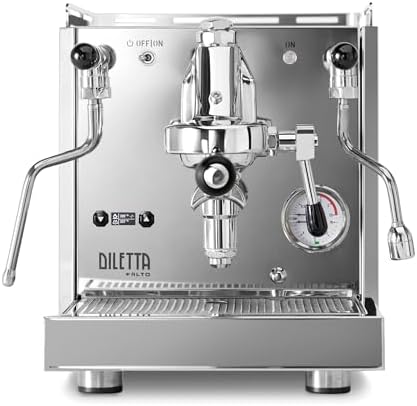
A prosumer Italian dual boiler with an E61 group, PID control on both boilers, a shot timer, and an adjustable pressure relief valve for setting brew pressure. Long warm-up, serious weight, and the kind of construction that gets rebuilt rather than replaced. This is the tier where machines stop being appliances.
🔁 Also Great: The Heat Exchanger Route
If simultaneous brewing and steaming is all you actually want, a heat exchanger machine delivers it from a single boiler, usually for less money and in a smaller body. You accept indirect brew temperature control and, on many machines, a short cooling flush before the shot. For milk drink drinkers who are not chasing precise brew temperatures, that is a fair trade.

Power, Plumbing, and Where It Will Live
Dual boilers are the heaviest and hungriest machines most kitchens will ever host. Check three things before ordering. Height matters, because many of these machines do not fit under standard wall cabinets with the lid and hopper clearance they need. Depth matters for the same reason. And electrical requirements matter: machines with two heating elements are designed to work within normal household supply, but the manufacturer’s stated requirements are the authority, not a general rule.
Plumbing is optional on most consumer models and standard at the prosumer end. A plumbed machine draws from your water line and often drains directly, which removes the daily tank refill but requires filtration you control. Whether plumbed or tank-fed, water treatment is not optional at this level. Scale in a boiler is the single most expensive failure in home espresso, and our guide to descaling solutions covers what is appropriate for machines with brass and stainless components.
Common Mistakes to Avoid
- Buying two boilers before buying a good grinder. Grind consistency limits every machine in this list. If the grinder is the weak link, the second boiler changes nothing you can taste.
- Assuming dual boiler means better espresso. It means better workflow and steadier temperature. Extraction quality still comes from technique and coffee.
- Overlooking warm-up time. An E61 machine that needs a long warm-up is a poor match for a rushed morning unless you put it on a timer or use the built-in schedule.
- Skipping water treatment. Hard water and boilers are a bad combination, and repairs at this tier are not casual. Filter first, descale on schedule.
- Measuring the counter but not the cabinet. These machines are tall as well as deep. Check clearance with the lid open before you commit.
Where to Go From Here
If this guide has convinced you that one boiler is enough for how you drink, the semi-automatic espresso machine guide covers the single boiler and thermoblock field in detail. If you want to know where the price ceiling sits before you shop, the best espresso machines under $2000 maps the tier where most dual boilers live, and the best value espresso machines guide is the honest counterweight. And if you already own a Breville, our walkthrough on descaling a Breville espresso machine covers the maintenance that keeps a two-boiler machine healthy.
Frequently Asked Questions
Is a dual boiler worth it for home use? It is if you make milk drinks regularly, because brewing and steaming happen at the same time instead of in sequence. For straight espresso only, a single boiler with good temperature control covers the same ground for less.
What is the difference between a dual boiler and a heat exchanger? A heat exchanger runs one boiler at steam temperature and heats brew water in a tube passing through it. A dual boiler has two separate boilers, so brew temperature is set directly instead of being managed with a cooling flush.
Do dual boiler machines take longer to warm up? Generally yes, and E61 group machines take longest because of the mass of the group. Machines with electrically heated groups are quicker, and many models include a scheduled start so the machine is ready when you are.
Do all dual boilers use a 58mm portafilter? Nearly all of them do, which makes accessories easy to source. Confirm before buying accessories, and see our tamper guide for matching a tamper to your basket.
Can a dual boiler machine be plumbed in? Some can, particularly prosumer machines with rotary pumps. Consumer models are usually tank-fed only. Check the specification, since plumbing also requires filtration and a drain plan.
The Bottom Line
A dual boiler espresso machine buys you simultaneous brewing and steaming plus tighter brew temperature control, and that is genuinely worth it if milk drinks are part of your routine. The Breville Dual Boiler is the balanced reference point, the Rancilio Silvia Pro X suits hands-on operators, and a prosumer E61 machine is the tier above. Before you step up, make sure your grinder is not the real bottleneck.