Last updated: May 27, 2026
This is the bracket where the money question changes shape. Below it, you are asking which machine to buy. Here, you are deciding whether to put everything into one appliance with a grinder built into its side, or to split the budget between a simpler machine and a grinder that does one job properly. Almost every disappointed buyer at this level got that single decision wrong.
This guide walks through both routes honestly, explains what genuinely improves in this price range and what does not, and shows where the third option, a fully automatic bean to cup machine, fits. If you are stepping up from below, our under $500 guide covers what you are leaving behind.
This article contains affiliate links. If you buy through them, we may earn a commission at no extra cost to you. Learn more.
Quick Answer
All in one, or a machine plus a separate grinder?
- For one appliance that does everything, the Breville Barista Express remains the default answer, with the Barista Pro as the faster, more refined version.
- For the best coffee per dollar, split the budget: a mechanically solid machine like the Rancilio Silvia or Gaggia Classic plus a dedicated grinder.
- Bean to cup super-automatics exist in this price range, but they trade shot control for one button convenience.
The Three Ways to Spend It Under $1000
Every machine in this price range belongs to one of three approaches, and they suit genuinely different households. Read the catch column carefully, because that is where buyer’s remorse comes from.
| Approach | Representative | Strength | The catch |
|---|---|---|---|
| All in one | Breville Barista Express | Grinder, dose, tamp and brew in one footprint | Built-in grinder is competent, not a specialist |
| Separates | Rancilio Silvia or Gaggia Classic plus grinder | Best flavor ceiling and easiest to upgrade piecemeal | Two appliances, more counter, more learning |
| Super-automatic | Bean to cup machines | One button drinks, minimal skill required | Little control over the shot, more to go wrong |
| Fast modern plus grinder | Breville Bambino Plus plus grinder | Tiny footprint, automatic milk, money left for beans | Single thermoblock, no shot to steam overlap |
If the third row appeals more than the others, that is worth knowing early, and our super-automatic espresso machine guide is the better home for that decision.
What Genuinely Improves Under $1000
Three things get better and one thing usually does not. Temperature management improves, either through digital control or through more metal mass in the group. Steam power improves noticeably, so milk texturing gets faster and more forgiving. And build quality improves, with more metal in the places that take heat and stress.
What does not automatically improve is grind quality. A built-in grinder in an all-in-one is designed to be good enough across many bean types, while a dedicated grinder at the same cost as that convenience is usually a better tool. That is the entire case for the separates route, and it is why experienced buyers keep making it.
Our Top Picks at a Glance
How we chose: we compared this price range on grinder integration, temperature control, steam performance, footprint, parts availability, and the themes that recur across long-running owner discussions. Selections lean on published specifications and review patterns rather than any hands-on trial of our own.
Each pick answers one of the approaches above, so the choice is about how you want your counter and your mornings to work.
☕ Best Overall
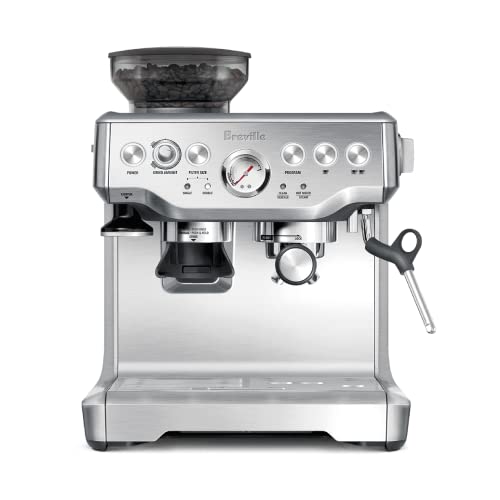
The Breville Barista Express bundles a conical burr grinder, a dosing system and a steam wand into one machine, which is why it has become the standard recommendation for a first serious setup. Our Breville guide covers the wider family.
⚡ Upgrade Pick
The Barista Pro keeps the all-in-one format but adds the faster heating system and a more refined grinder and interface, which shortens the gap between deciding you want coffee and drinking it.

🔩 Best Build Quality
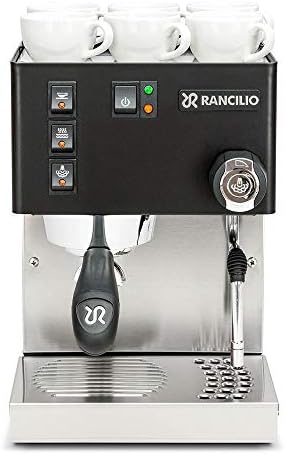
The Rancilio Silvia is a heavy, mechanically simple machine with a commercial size group and brass boiler, built to be serviced rather than replaced. The natural centerpiece for the separates route.
The Separates Route, Spelled Out
Splitting the budget means accepting two boxes on the counter in exchange for a higher ceiling and a cleaner upgrade path. When a dedicated grinder eventually feels limiting, you replace only the grinder. When the machine does, you replace only the machine. All-in-one owners replace everything at once, which is the hidden cost of the format.
It also produces better shots more consistently, because a grinder built for espresso alone can be more precise in the narrow adjustment window espresso lives in. If you want the reasoning behind grind size across brewing methods, our grinder guide for French press covers the coarse end of the same scale and makes the contrast clear.
⚙️ Best Grinder Pairing
A dedicated conical burr grinder with an espresso capable adjustment range is what turns a simple machine into a serious one. The Baratza Encore review explains where the best known option sits and what it does not do.

🥛 Best Compact Combination
Pairing the Bambino Plus with a good grinder gives you automatic milk texturing, a tiny footprint and money left for better beans, which suits small kitchens better than any all-in-one does.

Who Should Buy the All-in-One Anyway
Convenience is a legitimate feature, not a compromise to apologize for. If counter space is limited, if more than one person in the household will use the machine, or if you know yourself well enough to admit that a second appliance means a second thing to ignore, the all-in-one is the right call. Owners consistently report that the integrated format is what kept them making espresso at home rather than drifting back to the drive through.
The built-in grinders in this class are also genuinely usable. They will not satisfy someone chasing light roast single origins, but for the medium roast espresso blends most households actually drink, they are more than adequate.
Care, Water and Longevity
Machines at this level are worth maintaining properly because they are worth keeping. Backflush machines that support it, clean the group screen and baskets with a coffee residue cleaner on a regular rhythm, and purge and wipe the steam wand every single time. Built-in grinders need periodic burr cleaning too, since oils from darker roasts accumulate and dull performance.
Water is the deciding factor in how long any of this lasts. Filtered or appropriately treated water in the tank slows scale dramatically, and descaling remains a fact of life in hard water areas. Our descaling solution guide compares products, our walkthrough on descaling a Breville espresso machine handles the most common brand here, and our overview of Breville cleaning tablets and filters explains which consumables actually do something.
Common Mistakes to Avoid
- Buying an all-in-one and then buying a grinder anyway. If you suspect that is where you will end up, take the separates route from the start.
- Assuming this bracket includes a dual boiler. It does not. Simultaneous brewing and steaming lives one tier higher.
- Choosing on touchscreen appeal. Interfaces age faster than boilers, and none of them improve extraction.
- Ignoring counter depth and clearance. Several machines here need room above for the bean hopper or the water tank lid.
- Skipping burr cleaning. A neglected built-in grinder is the most common reason an all-in-one starts making worse coffee over time.
Where to Go From Here
If your budget stretches further, the next shelf brings dual boilers, PID control as standard and machines built around commercial parts, which our under $2000 guide covers. If this bracket feels like a stretch, the honest alternatives sit in our under $500 guide.
If you want to compare machines by what they cost you over years rather than at checkout, start with best value espresso machines. And if the appeal of this level is really about hands-off convenience, the super-automatic roundup and the semi-automatic guide lay out that trade-off in full.
Frequently Asked Questions
Is the Barista Express still worth buying? For a household that wants one appliance and a short learning curve, yes. Buyers who already own a good grinder generally get more from putting the same money into a simpler machine.
Barista Express or Barista Pro? The Pro heats faster and has a more refined grinder and display. The Express is the more established value. Neither changes what the coffee can taste like dramatically.
Do I need a PID in this price range? It helps repeatability, particularly for lighter roasts. Plenty of excellent espresso is made on machines without one, and technique matters more at this stage.
Can any machine here brew and steam at the same time? No. That capability defines the dual boiler tier, covered in our dual boiler guide.
How much of the budget should the grinder take? On the separates route, a common rule of thumb gives the grinder something close to a third of the total, and more if you drink lighter roasts.
Is a super-automatic a downgrade? Not in quality of life, only in control. If nobody in the house wants to learn dosing and tamping, it is the more realistic purchase.
The Bottom Line
The right machine in this price range depends on one honest self assessment: do you want one appliance or the better cup. The Barista Express and Barista Pro win the first question, while a Rancilio Silvia or a compact Bambino Plus paired with a dedicated grinder wins the second. Both routes make genuinely good coffee at this level, and only one of them lets you upgrade half your setup at a time.