Last updated: June 24, 2026
Searching for a plastic free coffee maker turns up a lot of listings and very few honest answers, because the term means different things to different sellers. Some brewers are genuinely made of nothing but glass, steel, ceramic, and wood. Others are marketed as plastic-free while the lid, the filter frame, or the handle tells a different story. Knowing which parts to check is more useful than any single product recommendation.
This guide takes the materials seriously. It covers what glass, stainless steel, ceramic, and aluminum each bring to a brewer, where plastic tends to hide even in products that look metal, what manufacturers typically claim about the materials they do use, and which brewers get closest to genuinely plastic-free. Some people simply prefer glass, steel, and ceramic in their kitchen, for reasons ranging from taste and durability to plain preference, and that is reason enough to shop this way.
This article contains affiliate links. If you buy through them, we may earn a commission at no extra cost to you. Learn more.
Quick Answer
What is the most plastic-free way to make coffee?
- Manual brewers get closest. A Chemex is a single piece of borosilicate glass with a wood collar, and a ceramic dripper over a glass server is just as clean in materials terms.
- For stovetop coffee, a stainless steel moka pot or percolator keeps the entire brewing path in metal, with resin only on the handle and knob.
- Electric machines are the hard case. Very few are free of plastic entirely, so the practical goal is minimizing it rather than eliminating it.
The Materials, and What Each One Is Good At
Plastic-free shopping is really materials shopping, and each alternative has genuine strengths and genuine annoyances. Glass shows you the brew and adds nothing to the flavor, but it breaks. Stainless steel is close to indestructible and holds heat better, but it hides the coffee from view. Ceramic feels wonderful and chips. There is no single winner, only the material that suits how you brew.
| Material | Where you see it | Strengths | Watch out for |
|---|---|---|---|
| Borosilicate glass | Chemex, pour over servers, French press beakers, cold brew jars | Neutral, easy to see and clean, dishwasher friendly on most models | Breakable, and sudden temperature swings can crack it |
| Stainless steel | Moka pots, percolators, French presses, kettles, filters | Durable, holds heat, travels well, no staining | Handles and knobs are usually resin, and you cannot see the brew |
| Ceramic and porcelain | Pour over drippers, servers, cups | Stable, retains heat once preheated, easy to clean | Chips and cracks if dropped, heavier than plastic equivalents |
| Aluminum | Classic moka pots, some percolators | Fast, light, the traditional stovetop material | Not induction compatible unless stated, and reactive with strong cleaners |
| Wood and cork | Chemex collar, handles, lids | Insulating, no coffee contact in most designs | Hand wash only, needs occasional oiling |
| Silicone | Seals, gaskets, sleeves | Flexible where a hard seal will not work | Not technically plastic, but not glass or metal either, so decide where your line is |
That last row matters more than it looks. Nearly every brewer with a moving part or a pressure seal uses a gasket, and gaskets are silicone or rubber. If your definition of plastic-free excludes those too, your realistic options narrow to a Chemex, a ceramic dripper, and a glass server.
Where Plastic Hides in Products That Look Metal
The quickest way to evaluate a listing is to walk the parts list rather than the headline. Six components account for almost all of the plastic in brewers marketed as metal or glass: the lid and its knob, the handle, the filter basket or frame, the measuring scoop, the seal or gasket, and on electric machines the water reservoir. A stainless French press with a plastic lid is still mostly steel, but it is not plastic-free.
Photographs are unreliable here, since black resin and black-coated metal look identical on a product page. The materials list in the specifications is the better source, and where it is vague, the manufacturer’s care instructions often give it away: parts described as dishwasher safe on the top rack only are usually resin rather than steel or glass.
What Manufacturers Actually Claim
Most brands using plastic components state that they are BPA-free and food-grade, and many specify the polymer family used. Brands that build in glass, steel, and ceramic tend to market the materials themselves as the feature, often alongside claims about durability and flavor neutrality. Technivorm, for example, highlights a copper heating element and a glass carafe on its Moccamaster brewers while also stating that the plastics it does use are BPA-free.
Those are claims about materials, and that is how we treat them here. Some people prefer to limit plastic in the parts that touch hot water, and manufacturers have responded to that preference with more glass, steel, and ceramic options. We describe what the products are made of and leave conclusions beyond that to you and to sources better qualified to give them.
Our Top Picks at a Glance
How we chose: we looked at brewers whose bodies, brewing chambers, and carafes are glass, steel, ceramic, or aluminum, then checked the parts that usually hide plastic, especially lids, filter frames, and handles. Selections lean on manufacturer material specifications and recurring themes in owner feedback rather than any hands-on trial of our own.
One reassurance before the list: none of these picks asks you to give up brew quality to get the materials you want. Every one of them is a well-regarded brewer in its own category.
🏆 Best Overall
One piece of borosilicate glass with a wooden collar and a leather tie, and nothing else. No plastic, no gasket, no filter frame, since the paper filter does all the work. It doubles as the serving carafe, cleans in seconds, and has been made essentially unchanged for decades, which is its own kind of endorsement.

🫖 Best Pour Over Setup
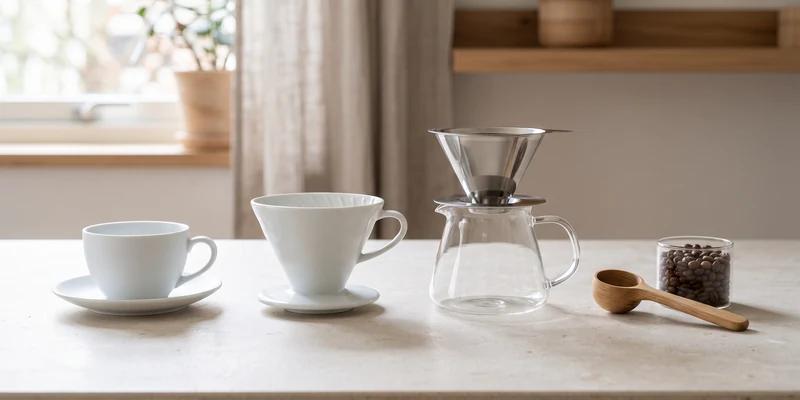
A ceramic cone dripper sitting on a glass server gives you the same all-glass-and-ceramic path with more control over the pour, and lets you brew a single cup instead of a full carafe. Ceramic versions of the classic cone drippers hold heat better than their plastic siblings once preheated. More options in our pour over coffee maker guide.

☕ Best Immersion Brewer
A double-wall stainless steel French press keeps coffee hot far longer than a glass beaker and shrugs off the drops that end most presses. Check the filter assembly before buying, since even all-steel presses commonly use a food-grade polymer seal ring around the mesh. Our French press walkthrough covers grind and timing.

Picks by Situation: Stovetop, Campfire, and Electric
The three above cover the countertop. These three cover the stove, the outdoors, and the awkward case of an electric machine.
🔥 Best Stovetop Pick
A stainless steel moka pot brews concentrated stovetop coffee with an all-metal path from the water chamber through the funnel to the upper collection chamber, with resin only on the handle and knob and a rubber or silicone gasket at the seal. Stainless versions also work on induction, unlike classic aluminum. See our stainless moka pot roundup.

⛺ Best for Camping and Big Batches
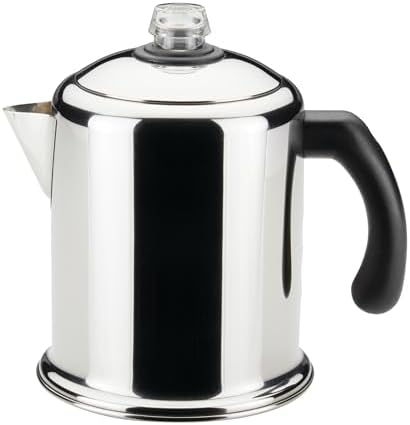
A stainless percolator is about as simple as coffee gear gets: a metal pot, a metal basket, a metal stem, and heat. It handles a campfire, a stovetop, or a cabin without a single fragile part, and there is no filter to buy unless you want one. Coarse grind and attention to timing are what keep it from turning bitter.
🔌 Closest Electric Option
If you want an automatic drip machine and still care about materials, look for a metal housing, a copper heating element, and a glass carafe. Machines built this way put far less plastic in the picture than a typical drip brewer, though the brew basket and some reservoir components remain plastic, which the manufacturer states are BPA-free. That is the honest ceiling for a plug-in machine.

Filters, Kettles, and the Rest of the Setup
The brewer is only part of the picture. Paper filters are paper, and bleached or unbleached is a taste and preference question rather than a materials one. Reusable filters split three ways: stainless mesh, cloth, and mesh mounted in a plastic frame. If materials are the point of the exercise, check the frame, since a stainless mesh disc in a plastic ring is a common design.
The kettle deserves the same scrutiny. Many electric kettles pair a stainless or glass body with a plastic lid, sight window, or water level indicator, and the spout collar is a frequent offender. Fully stainless stovetop gooseneck kettles avoid the question entirely at the cost of temperature control. Our guide to the best gooseneck kettles for pour over covers both routes, and if you want a truly all-metal option, a traditional Turkish coffee pot is copper or stainless from top to bottom.
Care That Keeps Glass and Steel Lasting
Glass brewers ask for one habit: avoid sudden temperature changes. Do not pour boiling water into a cold glass carafe straight from the cupboard in winter, and do not set a hot carafe on a cold stone counter. A quick rinse with warm water before brewing handles both. Wooden collars and handles come off or stay dry, and they want hand washing and an occasional wipe of food-safe oil.
Stainless brewers are more forgiving but they do stain internally with coffee oils, which dulls flavor over time. A periodic deep clean with a dedicated coffee equipment cleaner restores them, and stovetop pots benefit from being dried rather than left wet. Aluminum moka pots are the exception to nearly every cleaning rule: hot water and a soft cloth only, no dish soap, no dishwasher, since the seasoned interior is part of how they brew. For everything with a heating element, mineral scale is the long-term enemy; our guide to descaling solutions covers what to use where, and our walkthrough on cleaning a coffee maker with vinegar covers the household route.
Common Mistakes to Avoid
- Trusting the headline instead of the parts list. Plenty of brewers marketed as plastic-free have resin lids, frames, or handles. Read the materials section, not the title.
- Forgetting the gasket. Moka pots, percolators, and most presses need a seal, and seals are rubber or silicone. Decide up front whether that counts for you.
- Ignoring the kettle and the filter. A glass brewer fed by a kettle with a plastic spout collar and a plastic-framed filter has not changed much.
- Shocking glass with temperature. Borosilicate is tough, but rapid heating or cooling still cracks it. Warm the vessel first.
- Washing an aluminum moka pot with soap. It strips the seasoning that makes it brew well. Hot water and a soft cloth are the standard advice.
Where to Go From Here
If your concern is specifically about what the hot water touches on its way to the cup rather than the product as a whole, our companion guide to coffee makers with no plastic in the water path takes that narrower question apart step by step, including how to audit a machine you already own. If manual brewing appeals, the pour over coffee maker guide is the natural next stop, and the percolator roundup covers the all-metal option in more depth. For cold coffee, a glass or stainless cold brew maker follows exactly the same materials logic.
Frequently Asked Questions
Is there a truly 100 percent plastic-free coffee maker? Among manual brewers, yes: a Chemex or a ceramic dripper over a glass server uses only glass, ceramic, wood, and paper. Once you add a seal, a pump, or an electrical element, some polymer almost always appears somewhere.
Are there plastic-free electric coffee makers? Not completely, in practice. The closest options pair a metal housing, a metal heating element, and a glass carafe with a small number of plastic parts such as the brew basket, which manufacturers typically state are BPA-free.
Does silicone count as plastic? Technically silicone is a different class of material, not a conventional plastic, but it is also not glass or metal. Gaskets and seals are the usual place you will meet it, so decide where your own line sits before you shop.
Do I need special filters? No. Paper filters are paper, and stainless mesh filters are widely available. The one thing to check is whether a reusable mesh filter is mounted in a plastic frame, which is a common design.
The Bottom Line
Genuinely plastic-free coffee brewing means manual brewing: a Chemex, a ceramic dripper over a glass server, a stainless French press, or a metal stovetop pot. Electric machines can get close with a metal body, a copper element, and a glass carafe, but a few polymer parts almost always remain. Shop the parts list rather than the headline, and remember the kettle and the filter, which are where most plastic-free setups quietly slip.