Last updated: May 5, 2026
Buying a Turkish coffee pot looks like the easiest purchase in coffee until you see the listings. The same shape appears in hammered copper, plain copper, brass, and stainless steel, in capacities labeled anywhere from one cup to eight, and with handles that range from turned wood to a bare metal stick. Underneath the decoration, only three decisions actually change what ends up in your cup: how big the pot is, what it is made of, and whether the base suits your stove.
This guide sorts the category by those three questions. It explains why a cezve should never be filled to the top, why the cup count on the box is not the cup count in practice, what a tin lining is and how it ages, and which pots make sense for induction, where the traditional designs run into a real problem. If you are new to the method itself, our Turkish coffee guide covers the grind, the foam, and the serving customs first.
This article contains affiliate links. If you buy through them, we may earn a commission at no extra cost to you. Learn more.
Quick Answer
Which Turkish coffee pot should you buy?
- For most homes, a tin-lined hammered copper cezve sized for two to three demitasse cups is the classic choice, and the shape that builds foam best.
- If you want low maintenance, dishwasher tolerance, or a pot that lasts through years of casual use, stainless steel does the same job with none of the care routine.
- Buy smaller than you think. A cezve performs best filled between half and roughly two thirds, so a pot rated for six cups makes poor coffee when you only want two.
How to Choose a Cezve: The Four Things That Matter
A cezve is a simple object with strict requirements. It needs a narrow neck to concentrate foam, a wide base to sit on heat, enough thickness to spread that heat evenly, and a handle long enough to keep your hand out of the way. Everything else on a product page is decoration. The table below is the checklist to run before you order.
| What to check | Why it matters | What to look for |
|---|---|---|
| Capacity | A cezve brews best filled half to two thirds, so headroom is not optional | Pick a pot rated one to two cups above what you normally brew; two or three cup pots suit most households |
| Material | Copper conducts heat quickly and evenly; stainless is slower but easier to live with | Copper for foam and tradition, stainless for maintenance-free use; see our material comparison |
| Lining | Copper is not brewed in directly; traditional pots are lined, usually with tin | Confirm the listing states a tin or stainless interior; unlined decorative pots are display pieces |
| Base and stove type | Many traditional cezves have rounded or narrow bases that induction hobs will not detect | For induction, look for a flat magnetic base or plan on a diffuser plate; gas is the most forgiving heat source |
| Neck shape | The taper is what traps and thickens the foam | A clearly narrowed mouth with a defined pouring lip, not a straight-sided mug shape |
| Handle | The pot sits directly over flame for several minutes | Long handle, ideally wood or a heat-resistant material, riveted rather than glued |
| Wall thickness | Thin walls scorch and boil over faster | A pot with some weight in the hand heats more evenly and gives you a wider margin for error |
Sizing: Why the Cup Count on the Box Misleads
The cup ratings on cezve listings refer to a demitasse, not a mug, and they usually describe the pot filled to the brim, a level you should never actually reach. Turkish coffee foams as it heats, so a pot filled past about two thirds will either boil over or force you off the heat before the foam has developed. Owners consistently report better results on small batches and worse ones at the rated maximum.
The practical translation is straightforward. If you almost always make one or two cups, a pot rated for three is comfortable. If you regularly serve four people, a five or six cup pot is the right call, though many households find it easier to own two small pots and brew twice. Very large cezves are noticeably harder to control on a home stove.
Copper, Stainless, or Brass: The Honest Differences
Copper is the traditional material for good reasons. It moves heat quickly and evenly, which gives you a responsive pot that reacts the second you lift it off the flame, and the hammered finish is genuinely attractive. The cost is upkeep. Copper tarnishes, needs hand washing and drying, and the interior tin lining wears over years of use, at which point a well made pot can be re-tinned rather than replaced. That is normal maintenance in Turkey, less convenient in most American kitchens.
Stainless steel gives up some of the responsiveness and gains everything else: no tarnish, no lining to worry about, tolerance of dishwashers, and usually a lower price point. Plenty of experienced drinkers use stainless daily and consider the difference in foam marginal once technique is dialed in. Brass sits between the two, common in decorative and traditional pieces, and also lined on the inside. The full breakdown, including how to check a lining and what re-tinning involves, is in our copper versus stainless guide.
Our Top Picks at a Glance
How we chose: we compared widely available cezves on capacity honesty, material and lining, base compatibility with common American stoves, handle construction, and the patterns that repeat in owner feedback. Selections lean on product specifications and recurring themes in reviews rather than any hands-on trial of our own.
One thing to settle before you scroll: none of these pots require a special stove, with the exception noted in the induction pick, and any of them will outperform a saucepan for foam. Match the capacity to how you actually drink and you are unlikely to regret the choice.
🏆 Best Overall
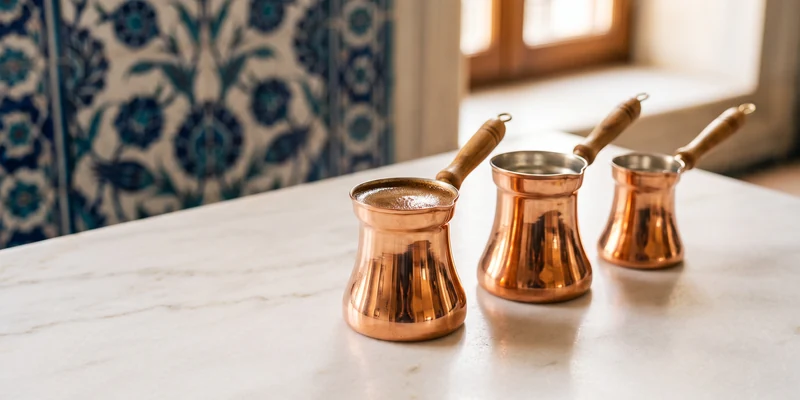
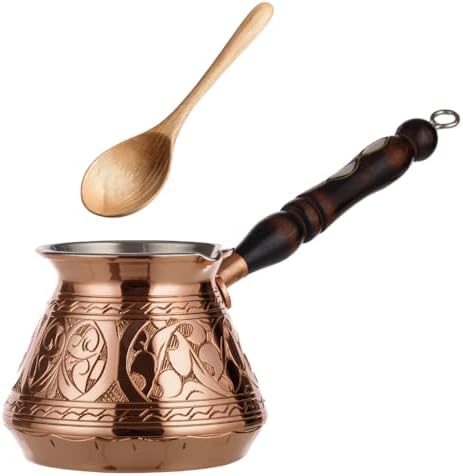
A hammered, tin-lined copper cezve in the two to three demitasse range, with a riveted wooden handle. This is the shape and size that suits the largest number of households: enough headroom for proper foam, small enough to control on a home burner, and repairable rather than disposable. Demmex is the copper name that comes up most often in American listings.
💰 Best Budget Pick
A plain stainless steel cezve in a small size. No lining to maintain, no tarnish, hand wash or dishwasher, and it produces a perfectly respectable head of foam once you keep the heat low. The sensible starting point if you are not yet sure how often you will brew.

☕ Best for a Single Cup
The smallest practical cezve, sized for roughly one to two demitasse. Owners who drink Turkish coffee alone report that a tiny pot is easier to foam and far quicker to heat than trying to make one cup in a larger vessel, which is the most common cause of a flat, foamless result.

Picks by Situation: Induction, Guests, and Gifting
The three above cover most buyers. These fill the gaps that come up repeatedly: modern cooktops, serving a table, and buying one for someone else.
🔌 Best for Induction Cooktops
A stainless cezve with a flat, magnetic base. This is the category’s real compatibility problem: traditional copper and brass pots are not magnetic and most have narrow or rounded bottoms that induction hobs simply ignore. A flat-based stainless pot solves it outright, and is worth checking against your hob’s minimum pan diameter before ordering.

👥 Best for Serving Several People
A larger copper or stainless cezve in the five to six demitasse range. Useful if you host regularly, with the honest caveat that bigger pots demand lower heat and more attention. Many owners keep one of these alongside a small pot rather than using it as their everyday brewer.

🎁 Also Great: The Complete Set
A cezve packaged with demitasse cups, saucers, and often a small tray. Sets make excellent gifts and solve the second purchase most new brewers forget, since a mug ruins the proportions of a drink designed around a small cup. Check the pot size in the set description, as gift sets often pair a modest pot with four cups.

Care: Keeping a Cezve in Good Shape
A copper cezve is a hand wash item: warm water, a soft sponge, no abrasive pads, dried immediately rather than left to air dry. The exterior will darken over time, which many owners consider part of the appeal; if you prefer it bright, a copper polish used sparingly on the outside only will restore it. Never polish the interior lining.
The lining itself is worth understanding. Tin is soft and wears slowly with use and heat, and a lining thinned to the point where copper shows through is the signal to have the pot re-tinned. Copper makers and metalworking shops offer the service, and in Turkey it is routine rather than exotic. Stainless pots skip all of this: wash, dry, done. Avoid dishwashers for anything copper or brass, and never leave used grounds sitting in a cezve overnight.
Common Mistakes to Avoid
- Buying too large. The most common regret in this category by a wide margin. A pot that is only a third full will not build a proper head of foam.
- Assuming copper works on induction. It generally does not, and neither does brass. Check for a flat magnetic base or budget for a diffuser plate.
- Ignoring the lining. Decorative unlined copper pieces are sold as ornaments. Confirm the listing specifies a tin or stainless interior before brewing in it.
- Putting it in the dishwasher. Detergent and heat are hard on tin linings and on copper finishes. Hand wash anything that is not fully stainless.
- Pairing it with the wrong grind. The finest pot in the world cannot rescue an espresso grind. Turkish coffee needs powder-fine coffee, covered in our grinder guide.
- Serving it in a mug. The proportions of the drink assume a demitasse. A large cup makes the same coffee taste thin and cools it far too fast.
Where to Go From Here
The pot is step one of three. Step two is the grind, which is where most home attempts fall apart, and our grinders for Turkish coffee roundup covers the traditional mills and the modern options that actually reach powder fine. Step three is technique, laid out in the Turkish coffee guide. If you are still weighing materials, the copper versus stainless comparison goes deeper than the summary above, and if you are curious about the closely related Greek tradition, our Greek coffee maker guide covers briki pots and frappe tools.
Frequently Asked Questions
What size Turkish coffee pot should I buy? Size it to one or two cups more than you normally brew, because a cezve works best filled half to two thirds. For one or two drinkers, a two or three demitasse pot is the sweet spot; larger pots are harder to control on a home stove.
Is copper or stainless steel better for a cezve? Copper heats faster and more evenly and is the traditional choice, while stainless is easier to maintain and dishwasher tolerant. Both make good coffee. Our material comparison covers the trade-offs in full.
Can you use a cezve on an induction cooktop? Only if it has a flat, magnetic base, which rules out most traditional copper and brass pots. A stainless induction-ready cezve is the direct solution, and an induction diffuser plate is the workaround if you already own a copper pot.
What is a cezve lined with, and does it wear out? Traditional copper cezves are lined with tin, and that lining does thin gradually with use. Once copper starts showing through the interior, the pot should be re-tinned or replaced. Stainless pots have no lining to manage.
Is a cezve the same thing as an ibrik? In English usage the two names are used more or less interchangeably for the same long-handled brewing pot. Strictly speaking ibrik refers to a jug or ewer, but you will see both words on product listings for the same object.
Can I use a regular saucepan instead? You can brew coffee in one, but the foam will be noticeably thinner because a wide, straight-sided pan lets it spread out and break. The tapered neck is the design feature doing the work, which is why the pot is worth buying.
The Bottom Line
The best Turkish coffee pot for most people is a tin-lined copper cezve sized for two or three demitasse, because copper responds fast and that capacity leaves the headroom foam needs. Choose stainless instead if you want a pot you never have to think about, or if you cook on induction, where a flat magnetic base is the only reliable option. Whatever material you pick, buy small, keep the heat low, and pair it with a powder-fine grind.