Last updated: May 21, 2026
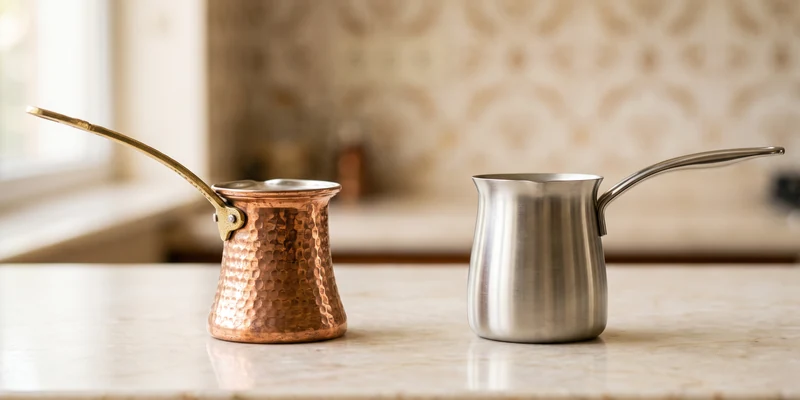
A copper Turkish coffee pot is the image everyone has in mind: hammered, warm-toned, a long wooden handle, the kind of object that looks good sitting on a stove doing nothing. Stainless steel versions of the same pot cost less, need no upkeep, and survive a dishwasher. So the question that decides most purchases is whether copper is genuinely better at making coffee, or mostly better at looking like it.
The honest answer has parts on both sides. Copper does something measurable that stainless does not, and stainless removes a maintenance routine that copper genuinely requires. This guide lays out how each material behaves on the stove, what a tin lining is and how it ages, which one works on modern cooktops, and how to decide without romanticizing either option. If you are still working out sizing, our broader Turkish coffee pot guide covers capacity and shape first.
This article contains affiliate links. If you buy through them, we may earn a commission at no extra cost to you. Learn more.
Quick Answer
Copper or stainless steel for a Turkish coffee pot?
- Copper conducts heat far faster and more evenly, which gives you a responsive pot and, with low heat, the easiest path to a thick head of foam.
- Stainless steel is the practical choice: no tarnish, no tin lining to wear out, dishwasher tolerant, and the only realistic option for induction cooktops.
- If you brew Turkish coffee often and enjoy the ritual, copper earns its upkeep. If you want a pot you never think about, stainless makes coffee that is very close.
Copper vs Stainless: The Differences That Matter
Both materials make good Turkish coffee, and technique matters more than either. Where they part company is in how forgiving they are, on the stove and at the sink. The table sets the two side by side on the points that actually come up in daily use.
| Factor | Copper (tin lined) | Stainless steel |
|---|---|---|
| Heat conduction | Very high; copper is one of the best conductors used in cookware, so the pot responds the instant you lift it off the flame | Much lower; heats and cools more slowly, which means less margin when the foam starts rising |
| Even heating | Excellent, with fewer hot spots along the base and walls | Good on thicker pots, more prone to uneven heating on thin ones |
| Foam performance | Generally reported as slightly easier to build and hold thick foam, mostly because control is finer | Very close once you keep the heat low; the gap narrows fast with practice |
| Maintenance | Hand wash only, dry immediately, tarnishes over time, no abrasive pads | Wash and forget; most are dishwasher safe and none of them tarnish |
| Interior lining | Tin, applied by hand on traditional pots, and it thins with years of use | None needed; the brewing surface is the same metal as the pot |
| Lifespan | Effectively indefinite if re-tinned when the lining wears | Very long, with no service ever required |
| Induction | Not compatible; copper is not magnetic and most bases are narrow or rounded | Compatible only if the listing says so, since not all stainless alloys are magnetic |
| Look | The traditional appearance, hammered or engraved, develops a patina | Plain and modern; stays the same for years |
Why Copper Behaves Differently on the Stove
Copper conducts heat many times faster than stainless steel, which is why it has been the standard for cezves for centuries and why professional kitchens still use copper for sauces that turn on a moment’s notice. In a Turkish coffee pot that translates into two practical advantages. The base heats evenly, so you get fewer scorched spots against the metal, and the pot cools the instant it leaves the burner, which is enormously helpful when the foam is climbing toward the rim and you need to stop the process now rather than in five seconds.
Whether that produces better coffee is a fairer question than the marketing suggests. Experienced drinkers using stainless daily consistently report excellent foam, because the fix for a slower pot is simply lower heat and more patience. What copper really buys you is a wider margin for error and a more responsive feel, not a different drink. If you tend to walk away from the stove, that margin is worth something. If you stand over the pot the way the method asks, stainless will not hold you back.
The Tin Lining: What It Is and How It Ages
Traditional copper cezves are not brewed in bare. The interior is lined, almost always with tin applied by hand, and that lining is what your coffee actually touches. Copper cookware is lined by convention across every cuisine that uses it, which is why unlined decorative pots sold as souvenirs are ornaments rather than brewers. Before you buy, check that the listing explicitly names a tin or stainless interior.
Tin is soft and has a low melting point, which is the reason every copper maker warns against heating a tinned pot while it is empty. Used normally, with liquid in it and moderate heat, a lining lasts for years, then gradually thins until copper starts showing through in patches. That is not a defect and not the end of the pot. Re-tinning is a routine service in Turkey and available from metalworking shops and some copper retailers in the United States, and a well made cezve can be relined repeatedly. Stainless pots skip this entire topic, which for many buyers is the whole argument.
Our Top Picks in Both Materials
How we chose: we compared widely available cezves on material and lining quality, base construction, handle attachment, capacity honesty, and the maintenance themes that recur in owner feedback. Selections lean on product specifications and repeated patterns in reviews rather than any hands-on trial of our own.
Two reassurances first. Every pick below is a real brewing pot rather than a decorative piece, and all of them are sized in the range where a cezve performs best rather than at the oversized end of the category.
🏆 Best Copper Overall
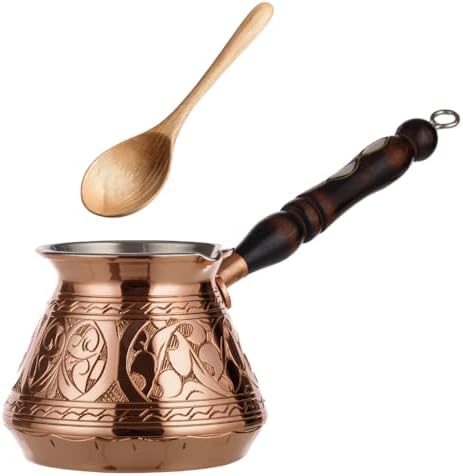
A hammered, tin-lined copper cezve in the two to three demitasse range with a riveted wooden handle. This is the configuration the tradition settled on: fast, responsive heat, a properly tapered neck, and a pot that can be re-tinned rather than thrown away. Demmex is the copper brand that appears most consistently in American listings.
🔧 Best Stainless Pick
A plain stainless steel cezve with a long handle and a clearly narrowed neck. Nothing to polish, nothing to reline, and it tolerates a dishwasher. Owners report that the only adjustment needed is keeping the flame lower than you would with copper, since the pot reacts more slowly.

⭐ Upgrade Pick
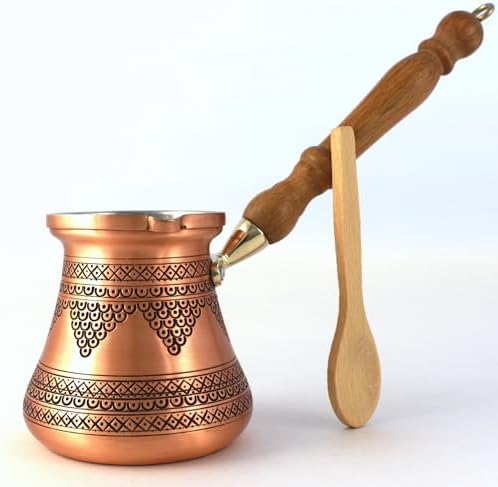
A thicker-gauge engraved copper cezve, the kind sold as a heritage or artisan piece. The extra wall thickness spreads heat more gently and gives you an even wider margin before the pot boils over, and the engraving is the reason these end up on a shelf rather than in a cupboard.
Picks for Modern Cooktops and for Display
Two situations fall outside the standard copper-or-stainless question: induction kitchens, where the material choice is made for you, and buyers who want the pot to look like an heirloom.
🔌 Best for Induction
A stainless cezve with a flat, magnetic base. Copper and brass will not work on induction at all, and even some stainless pots fail because their alloy is not magnetic or their base is smaller than the hob’s minimum detection size. Confirm both the induction symbol and the base diameter before ordering.

🎁 Also Great: Copper Set with Cups
A copper cezve packaged with demitasse cups and a tray. This solves the second half of the setup, since the proportions of Turkish coffee assume a small cup, and it is the version most people give as a gift. Check the pot capacity in the description, because gift sets often pair a modest cezve with four cups.

Living With a Copper Cezve
Copper care is simple but non-optional. Wash by hand in warm water with a soft sponge, skip anything abrasive, and dry the pot immediately rather than letting it drip, since standing water is what leaves spots on the exterior. Never put it in a dishwasher, and never leave used grounds sitting in it overnight. The outside will darken into a patina over months, which most owners come to like; if you prefer the bright finish, an occasional copper polish on the exterior only will bring it back. The interior lining should never be polished or scrubbed hard.
Two habits protect the lining specifically. Do not heat the pot empty, because tin does not tolerate dry heat well, and keep the flame no wider than the base so the walls are not taking direct fire. Neither of these is demanding, but they are the difference between a lining that lasts many years and one that needs attention early. If none of this appeals, that is a perfectly good reason to buy stainless, and nobody who drinks the coffee will be able to tell from the cup.
Common Mistakes to Avoid
- Buying an unlined decorative pot. Souvenir copper is often sold as an ornament. Look for tin or stainless named explicitly in the interior description.
- Assuming copper works on induction. It does not, regardless of price. Induction kitchens need a magnetic stainless pot or a diffuser plate.
- Dishwashing copper or brass. Detergent and sustained heat are hard on both the lining and the exterior finish.
- Heating the pot empty. Tin has a low melting point, so a dry cezve on a hot burner is the fastest way to ruin a lining.
- Judging stainless before adjusting the heat. A stainless pot on a copper-sized flame will run away from you. Drop the heat and the foam comes back.
- Focusing on the pot instead of the grind. Neither material rescues an espresso grind. Turkish coffee needs powder-fine coffee, covered in our grinder guide.
Where to Go From Here
If the material question is settled and sizing is next, the Turkish coffee pot guide explains why the cup count on the box overstates what a cezve should actually hold. If you are assembling the whole setup, the grinder roundup deals with the part most home brewers underestimate, and the Turkish coffee guide walks through the brewing sequence and the serving customs. Curious about the neighboring tradition that uses the same pot under a different name? Our Greek coffee guide covers the briki and the frappe.
Frequently Asked Questions
Is a copper Turkish coffee pot worth it? If you brew often and enjoy the ritual, yes: copper responds faster on the stove, heats evenly, and can be relined indefinitely. If you want zero maintenance or cook on induction, stainless gets you very close for less fuss.
Do copper cezves need to be lined? Yes, and traditional ones are, almost always with tin. Confirm the interior material in the product description, and treat unlined decorative pots as display pieces rather than brewers.
How long does the tin lining last? It varies with use and heat, but a lining typically serves for years before thinning. Once copper shows through in patches, the pot can be re-tinned by a metalworking shop or specialist retailer rather than replaced.
Can you put a copper coffee pot in the dishwasher? No. Hand wash in warm water with a soft sponge and dry immediately. Dishwasher detergent and heat are hard on both the tin lining and the exterior finish.
Does copper actually make better foam? It makes foam easier to control, which is not quite the same thing. The responsiveness gives you a wider margin before the pot boils over. Owners of stainless pots report excellent foam once they run a lower flame.
What about brass Turkish coffee pots? Brass is a copper alloy, also lined on the inside, heavier, and often chosen for its appearance. It behaves broadly like copper on the stove and needs the same hand washing, and like copper it will not work on induction.
The Bottom Line
Copper wins on the stove, stainless wins at the sink. A tin-lined copper cezve gives you fast, even heat and the finest control over rising foam, at the cost of hand washing, tarnish, and an eventual re-tinning. Stainless asks nothing of you, tolerates a dishwasher, and is the only realistic option on induction. Both make genuinely good Turkish coffee, so choose the one that fits your kitchen and your patience.