
Last updated: July 3, 2026
Shopping for a Greek coffee maker means shopping for a briki, and the briki is a refreshingly simple object: a small pot with sloping sides, a narrow mouth, and a long handle. There is no pump, no filter, and nothing to break. What varies is size, material, and whether the base works on your stove, and those three details decide whether you get a cup topped with proper kaimaki foam or a flat one with sediment stirred through it.
This guide sorts the category the way a careful buyer should. It explains why briki sizing overstates itself, what a tinned copper interior means in practice, where induction cooktops cause trouble, and which extra tool you need if you also want to make a frappe, which is a completely different drink built with completely different equipment. If the tradition itself is new to you, our Greek coffee guide covers the method, the foam, and how to order.
This article contains affiliate links. If you buy through them, we may earn a commission at no extra cost to you. Learn more.
Quick Answer
Which Greek coffee maker should you buy?
- A stainless steel briki sized for two to four demitasse cups suits most households: no maintenance, no lining to worry about, and it makes a properly foamed cup once you keep the heat low.
- Tin-lined copper is the traditional choice and heats faster and more evenly, at the cost of hand washing and eventual re-tinning.
- A frappe needs a different tool entirely. A handheld electric frother replaces the shaking, and the drink is built on instant coffee rather than anything the briki produces.
How to Choose a Briki: The Checklist
A briki has to do four things: taper toward the mouth so foam builds, sit stably on your heat source, spread that heat evenly, and keep your hand away from the flame. Everything else on a product page is finish and packaging. Run through the table before you order.
| What to check | Why it matters | What to look for |
|---|---|---|
| Capacity | A briki brews best filled half to two thirds, so the rated cup count is not usable capacity | Buy roughly one to two cups larger than you normally make; two to four demitasse covers most homes |
| Material | Copper responds faster on the stove, stainless needs no care at all | Stainless for daily convenience, tin-lined copper for tradition and finer heat control |
| Interior lining | Copper is never brewed in bare; traditional pots are tin lined | Confirm the listing names a tin or stainless interior, and treat unlined decorative pots as ornaments |
| Base and cooktop | Many briki bases are narrow or rounded, which induction hobs cannot detect | For induction, look for a flat magnetic base and check your hob’s minimum pan diameter |
| Neck taper | The narrowing mouth is what lets kaimaki build height instead of spreading | A clearly tapered profile with a defined pouring lip, not a straight-sided mini saucepan |
| Handle | The pot sits over direct heat for several minutes | Long handle, riveted rather than glued, in wood or a heat-resistant material |
| Wall thickness | Thin walls scorch and boil over with almost no warning | Some weight in the hand means more even heat and a wider margin for error |
Sizing: Buy Smaller Than the Label Suggests
Briki capacities are quoted in demitasse cups and generally describe the pot filled to the brim, which is a level you should never reach. Greek coffee foams as it heats, and a pot filled past roughly two thirds will either overflow or force you to pull it off before the kaimaki has formed. That headroom at the top is not wasted space, it is where the foam lives.
In practice, a briki rated for four cups is comfortable making two or three, and a six cup pot is a serving vessel for guests rather than an everyday brewer. Owners consistently report better results on small batches, which is why many Greek kitchens keep two sizes rather than one large pot. If you mostly drink alone, the smallest briki you can find will outperform a bigger one, because a shallow pool of liquid in a wide pot heats unevenly and foams poorly.
Stainless, Copper, or Electric
Stainless steel is what most Greek households actually use. It never tarnishes, has no lining to wear through, tolerates a dishwasher, and costs less than copper. The trade-off is responsiveness: stainless holds heat longer, so it keeps climbing for a second or two after you take it off the burner, which means running a lower flame and staying at the stove. Tin-lined copper reverses that, heating fast and evenly and cooling the instant it leaves the heat, at the cost of hand washing, tarnish, and a lining that eventually needs re-tinning. We cover that trade-off in depth in our copper versus stainless comparison, which applies to briki and cezve alike.
Electric Greek and Turkish coffee makers are a third route, and worth an honest note. These countertop machines heat and monitor the pot automatically, stopping before it boils over and dispensing into cups, which removes the one part of the process people get wrong. They take up counter space, they cost considerably more than a briki, and purists find the results less controllable. For an office, a household where nobody wants to babysit a stove, or anyone who has boiled over one pot too many, they solve a real problem.
Our Top Picks at a Glance
How we chose: we compared widely available briki pots on capacity honesty, material and lining, base compatibility with common American cooktops, handle construction, and the themes that repeat across owner feedback. Selections lean on product specifications and recurring review patterns rather than any hands-on trial of our own.
Two reassurances before the list. None of these require a special stove except where noted, and all of them are sized within the range where a briki actually performs well rather than at the oversized end of the category.
🏆 Best Overall
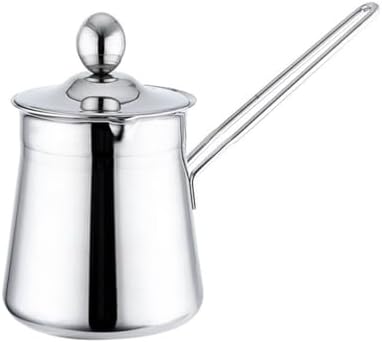
A stainless steel briki in the two to four demitasse range with a long handle and a clearly tapered neck. This is the pot most Greek kitchens run daily: nothing to maintain, dishwasher tolerant, and entirely capable of a thick kaimaki once you keep the flame low. The sensible default for a first purchase.
💰 Best Budget Pick
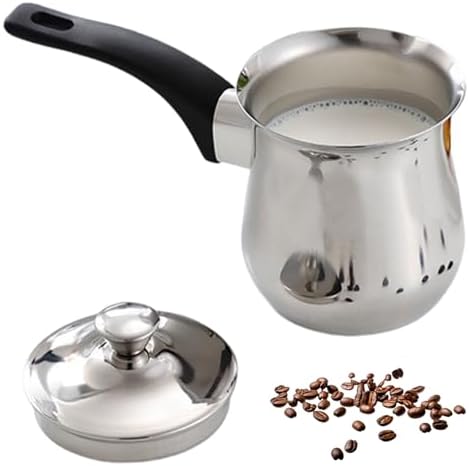
The smallest stainless briki you can find, sized for roughly one to two demitasse. Owners who drink Greek coffee alone report that a tiny pot foams more easily and heats faster than trying to make one cup in a larger vessel, which is the most common cause of a flat result.
⭐ Best Copper Pick
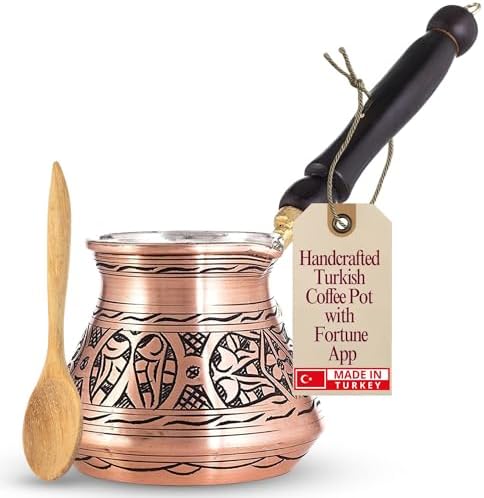
A hammered, tin-lined copper briki with a riveted wooden handle. Copper conducts heat far faster than stainless, so the pot answers immediately when you lift it off the flame, which is exactly the control you want as foam climbs toward the rim. Hand wash only, and expect a patina over time.
Picks by Situation: Frappe, Induction, and Gifting
Three cases the standard briki does not cover: the cold drink that made Greek coffee famous abroad, modern cooktops, and buying for someone else.
🧊 Best for Frappe
A handheld electric milk frother. A frappe is instant coffee, sugar, and a splash of cold water whipped into a thick pale foam before ice and water go in, and a frother does in fifteen seconds what a shaker does in a minute of effort. It is the single most useful accessory for anyone who wants both halves of Greek coffee culture, and the same tool covers cold foam for iced drinks generally.

🔌 Best for Induction Cooktops
A stainless briki with a flat, magnetic base. This is the category’s genuine compatibility trap: copper and brass will not work on induction at all, and even some stainless pots fail because their alloy is not magnetic or their base is narrower than the hob’s minimum detection size. Verify both the induction symbol and the base diameter.

🎁 Also Great: The Complete Set
A briki packaged with demitasse cups and saucers, sometimes with a tray. Sets solve the purchase most first-time buyers forget, since the proportions of Greek coffee assume a small cup and a mug makes the same drink taste thin. Check the pot capacity in the description, because gift sets often pair a modest briki with four or six cups.

What Else You Need
The briki is one of three things, and the other two matter more than most buyers expect. The first is the coffee itself, which has to be ground to a powder, noticeably finer than espresso and closer to flour. Most grinders sold for drip and espresso do not reach that setting, and using coffee that is even slightly too coarse produces a weak cup with a gritty sediment. Greek brands sell pre-ground fine coffee that solves this outright, and our powder-fine grinder guide covers the equipment route, since the requirement is identical for Greek and Turkish coffee.
The second is cups. A demitasse holds roughly a couple of ounces, and the drink is designed around that volume. Serving it in a standard mug makes the coffee taste weak, cools it far too quickly, and spreads the kaimaki so thin that it disappears. If your briki did not come with cups, buy them at the same time. A small spoon for distributing the first foam between cups rounds out the setup.
Common Mistakes to Avoid
- Buying a briki that is too large. The most frequent regret here. A pot filled a third of the way will not build a proper kaimaki.
- Assuming copper works on induction. It does not, and neither does brass. Induction kitchens need a magnetic stainless pot or a diffuser plate.
- Buying an unlined copper pot. Decorative copper is sold as an ornament. Look for tin or stainless named explicitly as the interior.
- Skipping the grind question. No briki compensates for coffee that is not powder fine. This is where most home attempts actually fail.
- Trying to make a frappe in the briki. Different drink, different ingredient. A frappe is instant coffee whipped cold, not anything brewed on the stove.
- Serving it in a mug. The proportions assume a demitasse. Buy the cups with the pot rather than improvising.
Where to Go From Here
With a briki chosen, the next step is technique, and our Greek coffee guide covers the brewing sequence, the kaimaki, and the sweetness vocabulary you need in order to order correctly. For the grind, the powder-fine grinder roundup applies directly. If you are weighing materials more carefully, the copper versus stainless comparison goes deeper, and the cezve guide is the sister article to this one, covering the same pot under its Turkish name. For frappe and iced drinks, our cold foam frother guide covers the whipping tools in more detail.
Frequently Asked Questions
What size briki should I buy? One to two demitasse larger than you normally brew, because a briki works best filled half to two thirds. For one or two drinkers, a two to four cup pot is the sweet spot; larger pots are harder to control on a home stove.
Is a briki the same as a cezve? Functionally yes. They are the same long-handled pot under Greek and Turkish names, and the brewing technique is the same. Our cezve guide covers the same sizing and material questions.
Can I use a briki on an induction cooktop? Only if it has a flat, magnetic base, which rules out copper and brass and some stainless pots too. Check for an induction symbol and confirm the base is wide enough for your hob to detect.
Do I need a special coffee for a Greek coffee maker? You need a powder-fine grind, noticeably finer than espresso. Greek brands sell it pre-ground, or you can grind it yourself if your equipment reaches that setting; see our grinder guide.
What do I need to make a frappe? Instant coffee, sugar if you want it, a little cold water, ice, and something to whip it with. A handheld electric frother is the easiest option, and evaporated milk is the traditional finish.
Are electric Greek coffee makers any good? They handle the part people get wrong, stopping the pot before it boils over, which makes them genuinely useful for offices and busy households. They cost more and take counter space, and owners who enjoy the ritual generally prefer a stovetop briki.
The Bottom Line
The best Greek coffee maker for most people is a stainless briki sized for two to four demitasse, because it needs no upkeep and leaves enough headroom for the foam to build. Choose tin-lined copper if you want faster, finer heat control and do not mind hand washing, and check for a flat magnetic base if you cook on induction. Then spend your attention on the grind and the cups, which matter as much as the pot does.