Last updated: August 13, 2026
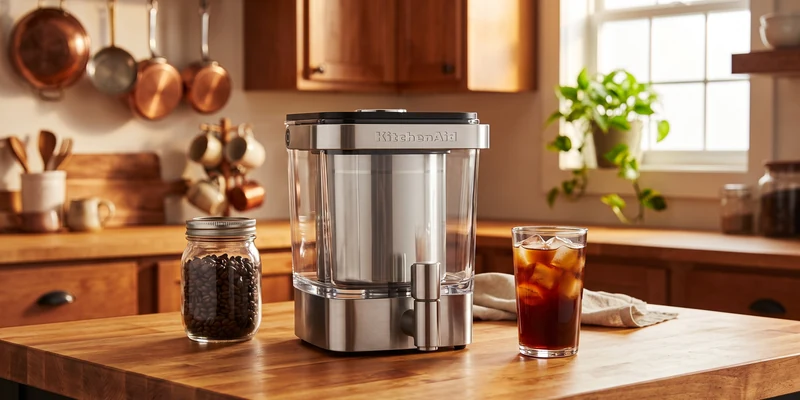
The KitchenAid cold brew coffee maker is the one product in this category that looks like it belongs next to a stand mixer. Where most cold brew brewers are plastic buckets or utilitarian pitchers, KitchenAid built a glass brewing chamber into a stainless steel frame with a tap on the front, and the result is a brewer people are happy to leave on the counter.
Looks are not a reason to buy a coffee maker, though, so this review reads it the way a careful buyer would: what the steel steeper does to the cup, what the tap actually solves, and one practical warning about availability that matters before you get attached to the idea. It is an assessment of the product’s design and of recurring themes in owner feedback rather than firsthand use of our own.
This article contains affiliate links. If you buy through them, we may earn a commission at no extra cost to you. Learn more.
Quick Answer
Should you buy the KitchenAid cold brew coffee maker?
- Yes, if you want a cold brew concentrate maker that looks and feels like real kitchen equipment, in glass and stainless rather than plastic.
- The reusable steel steeper means no paper filters to buy, and also more body and more sediment in the cup than a paper filtered brewer gives.
- Check availability before you commit: this model has come and gone from retailer listings, so confirm it is in stock rather than assuming.
KitchenAid Cold Brew Coffee Maker at a Glance
The KitchenAid is a full immersion brewer with the grounds held in a stainless steel steeper that sits inside a glass chamber, all of it wrapped in a stainless frame with a dispensing tap on some versions.
| Category | What to know |
|---|---|
| Brew method | Full immersion, steeped in the fridge or on the counter, then dispensed or poured |
| Materials | Glass brewing chamber, stainless steel frame and steeper, plastic lid and tap components |
| Filtration | Reusable stainless steel mesh steeper, no paper stage |
| Output | Concentrate, stored cold and diluted with water, milk, or ice |
| Dispensing | Tap on the front on the tap equipped version, which lets you serve without lifting the vessel |
| Cleanup | Steeper rinses out, glass chamber washes like any carafe, tap parts need attention |
| Ideal for | Buyers who want counter worthy materials and no consumables |
| Less ideal for | Fridge door storage, sediment sensitive drinkers, tight cabinets |
KitchenAid has offered this brewer in more than one configuration over the years, so match the listing you are looking at to the features described here rather than assuming they are identical.
What the KitchenAid Gets Right
Materials are the first genuine advantage. Glass and stainless steel are what most people would choose if every cold brew maker cost the same, and this is one of the few in the category that delivers both in a design meant to be seen. Owners consistently mention that it is the brewer they stopped hiding in a cabinet, and a brewer that stays visible is a brewer that gets used.
The steel steeper is the second. Nothing to buy, nothing to throw away, and no trip to the store when you run out of filters at the wrong moment. Combined with the tap on the versions that have one, serving becomes genuinely pleasant: you dilute in the glass rather than pouring a heavy vessel one handed. Getting the grind coarse and even is what makes a steel filtered brewer behave, which is why a burr grinder is the accessory that matters most here; see our cold brew grinder guide.
Where the KitchenAid Falls Short
Sediment is the trade you make for skipping paper. A steel mesh stops the grounds but lets the finest particles through, so the concentrate carries more body and more silt than an OXO or a Toddy produces, and it collects at the bottom over a few days in the fridge. Owners who care about a crystal clear cup often run the concentrate through a paper filter afterward, which works but adds back the step the design was trying to remove.
Practicality is the second caveat. This is a countertop shape, not a fridge door shape, and glass asks for the care glass always asks for. The tap and lid assemblies have more parts than a pitcher does, and they need proper cleaning if you want the coffee to taste like coffee. Finally, be honest with yourself about availability: this model has appeared and disappeared from retail listings, so confirm the exact version is in stock before planning around it.
How It Compares
Against the OXO Cold Brew Coffee Maker, the KitchenAid wins on materials and serving comfort while OXO wins clearly on cup clarity, because paper filtration is simply better at removing fines. Against the Toddy Cold Brew System, the KitchenAid is smaller and better looking, while Toddy brews far more concentrate at once and gives a softer profile through its felt filter. And against the Takeya Cold Brew Maker, the comparison is materials versus convenience, since the Takeya lives in the fridge door and the KitchenAid lives on the counter. Our best cold brew coffee makers guide places them all in order.
Check It Out
How we chose: the standard KitchenAid cold brew coffee maker with the stainless steeper is the configuration owner feedback describes, and the one most buyers are weighing against plastic pitcher brewers.
🏆 The Counter Worthy Concentrate Maker
A full immersion brewer in glass and stainless steel with a reusable steel steeper and, on the tap equipped version, a front dispenser you can serve from directly. The most kitchen appliance looking option in a category full of buckets.
✅ Glass and stainless build with no filters to buy
❌ Steel only filtration means more sediment, and availability is inconsistent

Who It Is For, and Who Should Skip It
Buy the KitchenAid if the brewer is going to live in plain sight, if you would rather clean a steel steeper than restock paper filters, and if a tap that lets you pour a glass without lifting a full vessel sounds like a genuine daily improvement. It rewards a coarse grind and a steep in the usual range, which for most people means somewhere between twelve and twenty four hours.
Skip it if sediment bothers you, if your fridge door is where you want the coffee to live, or if you need a large batch for a household of daily drinkers. And skip it, at least for now, if you cannot confirm the model is actually in stock in the configuration you want.
Alternatives Worth Considering
Three directions, depending on which KitchenAid limitation matters most to you.
🔎 Cleaner Cup, Reliably Available
The two stage immersion brewer that pairs a mesh filter with a paper filter and releases the concentrate into a glass carafe with a switch. The straightforward fix if sediment is your main objection.
✅ Very low sediment concentrate and a repeatable process
❌ Paper filters are an ongoing purchase and it takes counter space

🍶 Much Bigger Batches
The classic full immersion system with a reusable felt filter and a glass decanter, built to brew several days of concentrate in one go. Less handsome, considerably more productive.
✅ Large batch output with a smooth, rounded character
❌ Bulky, and the felt filter needs rinsing, wet storage, and replacing

🧊 Simplest and Smallest
A sealed pitcher with a mesh filter core that brews and stores in one piece and fits most fridge doors. Plastic rather than glass, but nothing here can break and nothing needs restocking.
✅ Brew, store, and pour from one dishwasher safe vessel
❌ Mesh only filtration and a modest capacity

Frequently Asked Questions
Does the KitchenAid cold brew maker use paper filters? No. It brews through a reusable stainless steel steeper, which is convenient but lets more fine particles through than paper does.
Does it make concentrate? Yes, it is designed as a concentrate brewer. You dilute the result with water, milk, or ice to taste rather than drinking it straight.
How long should it steep? Treat steep time as a range rather than a rule. Most people land somewhere between twelve and twenty four hours, and the included instructions are a sensible starting point.
Why is there sediment at the bottom? That is normal with a steel filter, and a coarser grind reduces it. Our grinder guide for cold brew covers why grind consistency matters more than the brewer here.
Is it still available? Availability has varied over time, so confirm the current listing before planning around it. If it is out of stock, our cold brew roundup covers the alternatives that are easy to find.
The Bottom Line
The KitchenAid Cold Brew Coffee Maker is the design led choice in a category that mostly ignores design: glass and stainless, a reusable steeper, and on the tap version a genuinely nicer way to serve. The cost is a heavier, siltier cup than paper filtered rivals produce, plus availability that comes and goes. If the look matters to you and you grind coarse, it delivers.
Check out the KitchenAid brewer