Last updated: August 13, 2026
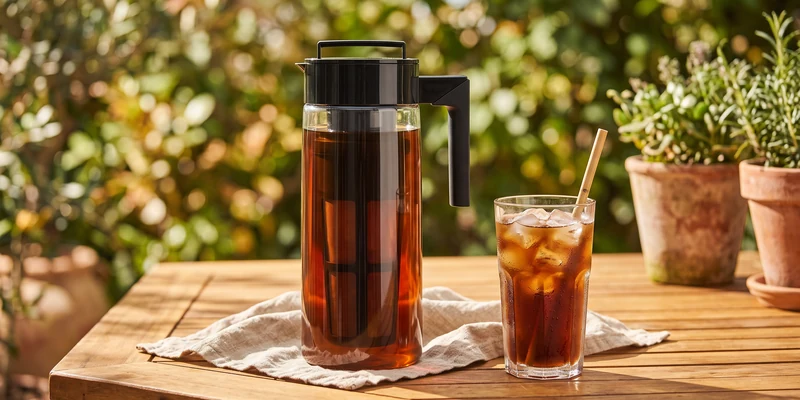
The Takeya cold brew coffee maker is the pitcher that convinced a lot of people cold brew was not a project after all. There is no stand, no carafe to transfer into, and no paper to buy. You fill the filter core with coarse grounds, top it with water, seal the lid, and put the whole thing in the fridge door until tomorrow.
This review looks at what that simplicity actually buys you, and what it costs. The Takeya is the most convenient brewer in its class by a wide margin, and it is also the one where filtration is the obvious compromise. Everything below is an assessment of the product’s design and of recurring themes in owner feedback rather than firsthand use of our own.
This article contains affiliate links. If you buy through them, we may earn a commission at no extra cost to you. Learn more.
Quick Answer
Is the Takeya cold brew maker worth buying?
- Yes, if you want the lowest friction route into cold brew: brew and store in one sealed pitcher, no consumables, dishwasher safe.
- Filtration is mesh only, so expect a slightly heavier cup than a paper or felt filtered brewer gives you, especially at the bottom of the pitcher.
- Skip it if you want glass in the water path or a large batch of concentrate for a household of daily drinkers.
Takeya Cold Brew Maker at a Glance
The Takeya is an immersion brewer built into a pitcher. A tall mesh filter core holds the grounds, the airtight lid lets you brew lying down or upright, and the finished coffee stays in the same vessel until it is gone.
| Category | What to know |
|---|---|
| Brew method | Immersion in the fridge, with the grounds held in a removable filter core |
| Materials | BPA free Tritan plastic pitcher and lid, mesh filter core, silicone grip on the handle |
| Filtration | Fine mesh only, no paper or felt stage |
| Output | Your choice: a ready to drink strength or a concentrate, set by the coffee to water ratio |
| Storage | Brews and stores in the same pitcher, sized to fit most fridge doors |
| Cleanup | Dump the filter core, rinse, and it is generally dishwasher safe |
| Ideal for | Solo drinkers, small kitchens, anyone who wants zero setup |
| Less ideal for | Big households, sediment sensitive drinkers, buyers who want glass |
Takeya offers the pitcher in more than one size, so check the capacity on the listing against how much you actually drink in a few days.
What the Takeya Gets Right
Friction is the whole story, and the Takeya removes almost all of it. Brewing and storing in one vessel means there is no decanter to wash, nothing to assemble on the counter, and nothing to remember to buy. Owners consistently mention that this is the brewer they actually keep using, because starting a batch takes about two minutes and washing up takes about one. For a habit that lives or dies on convenience, that matters more than most spec sheet features.
Flexibility is the second strength. Because you control the ratio, the same pitcher makes a ready to drink coffee you pour over ice or a stronger concentrate you cut with milk. Many people start somewhere in the usual immersion range and adjust from there, steeping between roughly twelve and twenty four hours depending on how heavy they want the cup. Grind consistency does more for the result than the brewer does, which is why pairing it with a burr grinder set coarse is the upgrade worth making first; our cold brew grinder guide covers the options.
Where the Takeya Falls Short
Mesh only filtration is the honest limitation. A fine mesh screen stops the grounds but not the finest particles, so the cup carries more body and more sediment than a paper or felt filtered brewer produces, and the last pour from the pitcher is where owners notice it most. The common workaround is a second pass through a paper filter or a slightly coarser grind, both of which help. Grinding too fine has the opposite effect: it clogs the core and slows extraction unevenly.
Materials are the second consideration. The pitcher is BPA free Tritan rather than glass or stainless, which is what makes it light, shatter resistant, and fridge door friendly. Some people simply prefer glass or stainless in the water path, and if that is you, this is not your brewer; our roundup of plastic free coffee makers takes that preference seriously. Finally, batch size is modest by design, so a two coffee a day household will be refilling often.
How It Compares
Against the OXO Cold Brew Coffee Maker, the Takeya trades clarity for convenience: OXO’s mesh plus paper combination gives a visibly cleaner concentrate, at the cost of counter space and a consumable. Against the Hario Mizudashi, the two are close cousins, with the Hario offering a glass carafe and a slimmer profile while the Takeya offers a sturdier body and a tighter seal. And against the Toddy Cold Brew System, this is a question of scale, since Toddy exists to brew several days of concentrate at once. Our best cold brew coffee makers guide lines them up properly.
Check It Out
How we chose: the standard Takeya cold brew pitcher with the mesh filter core is the version nearly all owner feedback describes, and the one most buyers compare against countertop systems.
🏆 The Easiest Way Into Cold Brew
A sealed Tritan pitcher with a mesh filter core that brews and stores in one piece and fits most fridge doors. Nothing to assemble, nothing to buy again, and a ratio you can tune from ready to drink all the way to concentrate.
✅ Brew, store, and pour from the same dishwasher safe pitcher
❌ Mesh only filtration shows fines, and the body is plastic rather than glass

Who It Is For, and Who Should Skip It
Buy the Takeya if you are one or two people, if fridge space is the real constraint in your kitchen, or if previous cold brew attempts died because the cleanup was annoying. It is also the sensible first brewer to find out whether you like cold brew enough to invest in something larger later.
Skip it if sediment bothers you, if you want glass or stainless in the water path, or if you need several days of concentrate at a time. Those three preferences point at the OXO, the Hario, and the Toddy respectively.
Alternatives Worth Considering
Three directions, depending on which Takeya limitation matters most to you.
🔎 Cleanest Cup in the Category
An immersion brewer with a mesh filter and a paper filter working together, releasing the concentrate into a glass carafe with a switch. If sediment is the thing you keep noticing, this is the fix.
✅ Two stage filtration gives a notably clear concentrate
❌ Takes counter space and keeps you buying paper filters

🔍 Glass, Slim, and Minimal
A heat resistant glass carafe with a long mesh filter that brews in the fridge and pours straight into the cup. The pick for people who want glass in the water path and very few parts to wash.
✅ Glass carafe with a small footprint and quick cleanup
❌ Breakable, modest capacity, and mesh only filtration

🍶 Built for Batches
The classic full immersion system with a reusable felt filter and a glass decanter, designed to brew several days of concentrate in one session. The right answer for households, not for solo drinkers.
✅ Large batch output and a notably smooth, rounded cup
❌ Bulky, and the felt filter needs rinsing, wet storage, and replacing

Frequently Asked Questions
Does the Takeya make concentrate or ready to drink coffee? Either, depending on your ratio. Use more coffee to water for a concentrate you dilute, or less for something you pour straight over ice.
How long should it steep? Treat steep time as a range. Many people land somewhere between twelve and twenty four hours in the fridge, with longer steeps giving a heavier cup, and the included instructions are a fine starting point.
Why is my Takeya cold brew cloudy? Usually the grind. A coarse grind is commonly recommended for immersion brewing; fines pass straight through a mesh filter and cloud the pitcher. Our grinder guide explains what to look for.
Is the pitcher plastic? Yes, it uses BPA free Tritan, which is what makes it light and shatter resistant. If you would rather keep plastic out of the water path, see our plastic free coffee makers roundup.
Can you brew tea in it? The filter core works with loose leaf tea as well, which is a common secondary use owners mention. Rinse it well between uses so flavors do not carry over.
The Bottom Line
The Takeya Cold Brew Coffee Maker wins on friction: one sealed pitcher that brews, stores, and pours, with nothing to buy again and a ratio you can tune to taste. Mesh only filtration and a plastic body are the honest trade offs, and a coarse, even grind does most of the work of fixing the first one. For solo drinkers and small kitchens, it is the easiest recommendation in the category.