Last updated: August 13, 2026
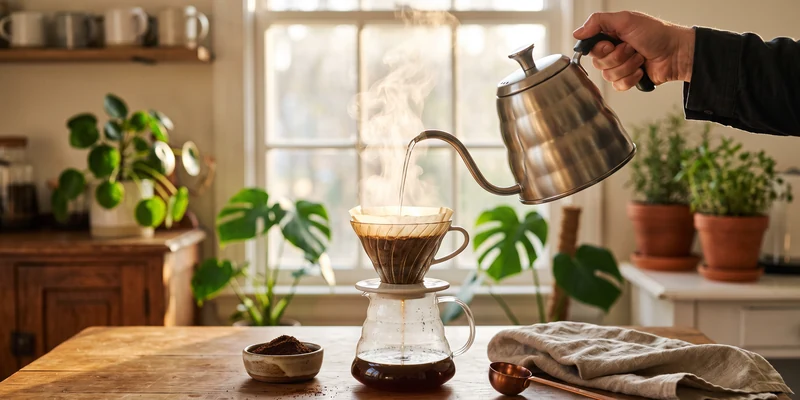
A gooseneck kettle for pour over coffee looks like a styling exercise until the first time you use one. That long, narrow, curved spout does one job: it turns a gulp of water into a thin, steady stream you can aim. You stop dumping water into a cone and hoping, and start placing it, in slow circles, at a pace you decide. Most of what people call technique in pour over is really water placement, and the spout makes placement possible.
This guide sorts the category the way a careful buyer should. First the big fork in the road, electric with variable temperature control against a simple stovetop kettle, then the details that decide whether you enjoy the thing every morning: handle balance, usable capacity, induction compatibility, and what sits in the water path. Along the way you will find four kettles worth shortlisting, each for a different kind of kitchen.
This article contains affiliate links. If you buy through them, we may earn a commission at no extra cost to you. Learn more.
Quick Answer
Which gooseneck kettle should you buy for pour over?
- For most people, an electric gooseneck with variable temperature control is the easy answer, because it removes the guesswork and holds a set temperature while you brew.
- If you already own a thermometer or trust your timing, a stovetop gooseneck pours just as well for less money and takes up less counter space.
- Whichever you choose, judge it on spout shape, handle balance, and usable capacity before you look at anything else.
What Actually Matters in a Gooseneck Kettle
A few things separate a kettle you love from one you tolerate: the spout, the heat source, temperature control, the handle, real usable capacity, and the materials in the water path. Use the table as a shortlist filter, then read the sections underneath for the decisions that carry the most weight.
| What to check | Why it matters | What to look for |
|---|---|---|
| Spout shape | Decides how thin and controllable your stream is | A narrow opening with a long, gently curved neck; some taper more for a finer stream |
| Heat source | Electric adds control, stovetop adds simplicity | Electric base for set-and-forget temperature; stovetop for fewer gadgets on the counter |
| Temperature control | Water temperature changes how a coffee tastes | Variable settings on electric models; a thermometer or a timed rest off the boil on stovetop |
| Hold temperature | A pour over runs several minutes from bloom to finish | A keep warm function so the last pour is not much cooler than the first |
| Handle balance | A wobbling wrist ruins an otherwise good pour | A counterbalanced handle set back from the body, with a grip that stays comfortable |
| Usable capacity | Listed capacity is the brim, not what you can pour | Fill below the maximum line; size up if you regularly brew for two |
| Cooktop compatibility | Induction only heats magnetic bases | Confirm induction compatibility for stovetop models and check for a flat, wide base |
| Water path materials | Some people prefer to limit plastic in the water path | Stainless interiors and spouts; check whether the lid or fittings introduce plastic |
A kettle pairs naturally with a scale and a decent grinder. Our guides to the best coffee scales and best manual coffee grinders cover those, and the best pour over coffee makers guide covers the brewer itself.
Electric or Stovetop: The Decision That Shapes Everything Else
An electric gooseneck sits on its own powered base, lets you dial in a target temperature, then heats to it and stops. That is the whole pitch, and it is a good one. Water temperature is one of the few brewing variables you can set precisely, and most pour over guidance points to a range somewhere in the low to mid 200s Fahrenheit rather than one correct number. An electric kettle lets you move inside that range deliberately, hotter for a light roast, cooler for a dark one.
A stovetop gooseneck asks more of you and gives back simplicity. No electronics to fail, no base eating counter space, and usually a lower price for comparable pour quality. The catch is that it will happily take your water to a rolling boil and tell you nothing about it. You either buy a thermometer, use a lid-mounted gauge if the model has one, or adopt the old habit of pulling the kettle off the heat and letting it rest a minute or so before pouring. That habit works, but it is an estimate, and it drifts with your kitchen and your kettle.
The Keep Warm Question
A full pour over is not a single pour. You bloom, wait, then pour in stages over several minutes while the water in the kettle cools. A hold temperature or keep warm function keeps the last pour close to the first, which matters more than most buyers expect, and it leaves the kettle ready at temperature for a second cup or a tea.
Spout, Handle, and the Capacity Nobody Mentions
The spout is the reason this category exists. A long neck with a narrow opening gives you a stream you can slow to a trickle and place exactly on the coffee bed, which is how you get even extraction instead of channels and dry patches. Baristas generally recommend judging a kettle by how slowly it can pour, not how fast.
Handle balance is the second thing you feel and the first thing you forget to check. A counterbalanced handle, set back from the body, keeps the kettle’s weight over your wrist instead of hanging off it, so the stream stays steady through a long pour. Reviews consistently mention handle comfort as the difference between kettles that look identical on paper.
Fill It Less Than You Think
Listed capacity is a brim measurement. On a gooseneck the spout inlet sits low in the body, so filling to the top means water leaves through the spout the moment you tilt. Plan to fill to the maximum line at most, and expect the practical working volume to be less than the number on the box. Single cup brewers do better with a smaller kettle, which is lighter and faster to heat; brewing for two argues for more capacity. Owners report that a full kettle feels noticeably heavier at the wrist, which is a second reason to buy the size you actually use.
Our Top Picks at a Glance
How we chose: we compared widely available gooseneck kettles on spout control, temperature features, handle design, materials in the water path, and the themes that repeat across owner reviews. These are assessments of published specifications and feedback patterns, not hands-on trials of our own.
Every pick pours a genuinely controllable stream, the part technique cannot fix later. The differences are temperature control and counter space.
☕ Best Overall
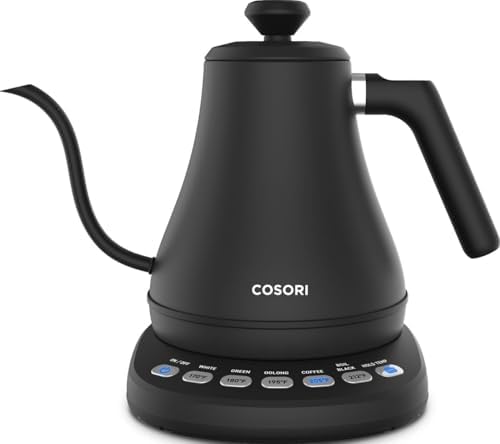
An electric gooseneck with variable temperature control and a keep warm function, the combination most pour over drinkers end up wanting. It covers the useful features of the category without the premium tier’s price, and owners consistently praise the stream control in this class. Our Cosori electric gooseneck kettle review covers the trade-offs.
⭐ Upgrade Pick
The design-forward option, with precise temperature setting, a hold function, and spout and handle geometry that reviewers regularly treat as the benchmark for slow, deliberate pouring. You pay for the fit and finish, so buy it if the kitchen is part of the pleasure.

🔥 Best for Stovetop Brewing
A stainless stovetop gooseneck from one of the names most associated with pour over, with the classic slim spout and a simple build. No electronics, no base on the counter, and a familiar choice for people who would rather own a thermometer than a gadget. Confirm cooktop compatibility before ordering.

Best for Small Kitchens and Travel
Not every setup has counter space for a powered base, and not every brew is a full carafe. If you make one cup at a time or travel with a brewing kit, a compact stovetop kettle solves the problem more elegantly than a full-size electric.
🎒 Best for Travel and Small Batches
A compact stovetop gooseneck built around single cup and small batch brewing, with a fine tapered spout that gives real control at low flow rates. It heats quickly, packs into a bag, and skips the base entirely. The trade-off is the usual stovetop one: you supply the temperature judgment.

Living With a Gooseneck Kettle
Two habits keep a gooseneck kettle pleasant. Fill below the maximum line so nothing escapes the spout when you tilt, and empty it after use rather than leaving standing water in the body. Standing water is how mineral deposits get their start, especially in hard water areas, and a narrow spout is exactly where you do not want scale.
Descaling is the one piece of maintenance you cannot skip. Follow the interval and method in your kettle’s manual, since electric models with temperature sensors have specific instructions and some finishes react badly to the wrong product. Our guide to descaling solutions covers what the common options do. For anything beyond descaling and cleaning, stay with the manufacturer’s documentation and customer service; opening a powered appliance yourself can void the warranty.
Pouring Well Takes About a Week
The technique is simple and gets comfortable quickly. Start with a small pour to wet the grounds and let them bloom, then pour in slow spirals from the center outward, keeping the stream thin and the spout close to the bed. Let the water level in the dripper guide your pace. If you also own a French press, the contrast is instructive: our guide on how to use a French press shows how much less the pour matters when coffee steeps instead.
Common Mistakes to Avoid
- Buying on looks alone. A beautiful kettle with a poorly balanced handle is one you will fight every morning. Handle geometry and spout taper matter more than finish color.
- Overfilling. The spout inlet sits low in the body. Fill past the line and water leaves through the spout as soon as you tilt.
- Assuming induction compatibility. Induction only heats magnetic bases, and not every stainless kettle qualifies. Check the listing, and check the base is wide enough for your burner.
- Treating one temperature as correct. Guidance here is a range, not a rule. Move within it based on your beans and your taste.
- Skipping descaling until the kettle complains. Scale builds quietly and a narrow spout shows it first. Put the interval from your manual on the calendar.
- Buying a kettle before a scale. Controlled pouring without measured water is half a system. A basic scale changes results faster than an upgraded kettle.
Where to Go From Here
Building a setup from scratch works best from the brewer outward: the best pour over coffee makers guide covers cones, flat bottoms, and full brewing sets. From there, a scale that reads to a tenth of a gram and starts a timer is the highest-value accessory in the hobby, which is what the coffee scales guide is for. Grind consistency comes next, and the manual grinder guide explains why burrs matter more than the housing. For specifics on the kettle at the top of this list, the Cosori gooseneck kettle review goes deeper.
Frequently Asked Questions
Do you really need a gooseneck kettle for pour over? You can brew without one, but results are less consistent, because a wide spout dumps water in surges that dig channels in the coffee bed. It is the gear that most directly improves pour over control.
Is an electric gooseneck worth it over a stovetop model? If you value set-and-forget temperature and a keep warm function, yes. If you brew by feel or own a thermometer, a stovetop kettle pours just as well for less.
What water temperature should I use? Treat published guidance as a range rather than a rule. Many brewers work somewhere in the low to mid 200s Fahrenheit, hotter for light roasts and cooler for dark ones, then adjust to taste.
Will a gooseneck kettle work on an induction cooktop? Only if the base is induction compatible, which not all stainless kettles are. Check the listing for an explicit induction reference and confirm the base diameter suits your burner.
How do I keep a gooseneck kettle clean? Empty it after each use, wipe the exterior, and descale on the interval your manual specifies. Our descaling guide covers the common products.
What capacity should I buy? Match it to how you brew: smaller is lighter and more controllable for single cups, larger suits brewing for two. Fill below the maximum line either way.
The Bottom Line
The right gooseneck kettle comes down to one question: do you want to set the temperature or estimate it? An electric model with variable temperature and a hold function, like the Cosori, answers it for most people, while the Fellow Stagg EKG is the upgrade for anyone who wants the design and the finer control. If you would rather keep the counter clear, a stovetop Hario or a compact travel kettle pours beautifully and asks only that you supply the judgment.