Last updated: August 12, 2026
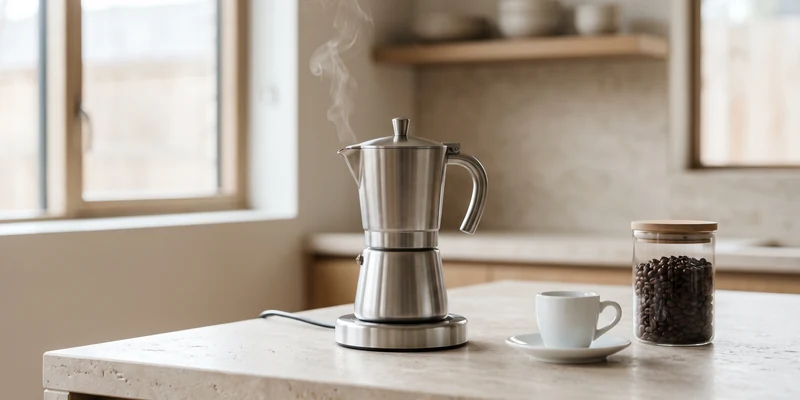
An electric espresso moka pot takes the ninety-year-old stovetop design and gives it a thermostat. Same two chambers, same funnel basket, same low-pressure brew, except the heat comes from a built-in element that shuts itself off when the pot is done instead of from a burner you have to watch. For anyone with an induction cooktop, a dorm room, an office, or a habit of forgetting the stove, that is a genuinely useful trade.
This guide covers what an electric moka pot does well, where it gives up control compared with the stovetop original, and which models keep coming up in owner feedback. It also flags the two things buyers most often overlook: the plastic in the upper chamber on many models, and the fact that these still are not espresso machines.
This article contains affiliate links. If you buy through them, we may earn a commission at no extra cost to you. Learn more.
Quick Answer
Which electric moka pot should you buy?
- For most buyers, a six cup electric moka with a detachable cordless base, a keep-warm function and automatic shutoff covers the job, and that is our Best Overall pick below.
- Buy electric if you have induction, no stovetop, or want the pot to stop itself. Stick with stovetop if you want maximum control over heat and timing.
- Match the capacity to your normal serving, because a moka pot cup is a small espresso-style pour of roughly two ounces, not a mug.
What to Check Before You Buy
Electric moka pots are simple appliances, and the differences between them sit in a short list of features. These are the ones that change daily use.
| Feature | Why it matters | What to look for |
|---|---|---|
| Automatic shutoff | Stops the element when brewing finishes, which prevents the scorched finish stovetop pots get | Listed explicitly; nearly all reputable models have it |
| Keep-warm function | Holds the finished coffee at temperature for a set window | Useful for households; check how long it runs before it cuts out |
| Cordless base | Lets you lift the pot off and carry it to the table | A detachable base with a 360 degree connection |
| Materials | Many electric models use a plastic upper carafe rather than metal | Check the upper chamber material if you prefer to limit plastic in the water path |
| Capacity | Moka pots must be brewed full, so the size is the serving | Roughly two ounces per listed cup; buy for your normal day |
| Spare parts | The gasket and filter plate are consumables on every moka pot | Confirm replacement gaskets exist for the model before buying |
One caveat that applies to every pot in this category: an electric moka pot brews at roughly the same low pressure as a stovetop one, generally in the range of one to two bar against about nine bar in a pump espresso machine. It makes strong, concentrated coffee that works beautifully in milk drinks. It does not make espresso, and no marketing copy changes that.
Electric or Stovetop: Which Suits You
The case for electric is mostly about circumstances. If your kitchen has an induction cooktop, a standard aluminum moka pot will not work at all, and while stainless induction models exist, an electric pot sidesteps the problem entirely. If you brew at a desk, in a dorm, in an office kitchen, or in an RV, an electric pot needs only an outlet. And the automatic shutoff removes the single most common stovetop mistake, which is leaving the pot on the burner past the gurgle and pulling a bitter last fraction into the cup.
The case for stovetop is control. On a burner you decide the heat, you can start with hot water to shorten the warm-up, and you can pull the pot at the exact moment the flow turns pale. Stovetop pots are also cheaper, have no electronics to fail, and come in all-metal builds. If you enjoy the ritual, the stovetop original is the more satisfying object; our stainless moka pot guide covers that side of the aisle, and induction owners should read our induction moka pot guide before choosing either route.
Our Top Picks at a Glance
How we chose: we compared electric moka pots on shutoff and keep-warm behavior, base and carafe materials, capacity options, spare-part availability, and the reliability themes that repeat across owner reviews. Selections rest on manufacturer specifications and published product information rather than any hands-on trial of our own.
Worth noting up front: this is a small category in which the models resemble one another closely, so the honest advice is to pick the capacity first and the badge second.
One name you will not find in the picks is Bialetti. The company invented the moka pot in 1933 and does sell electric versions of its own design, but they come and go in the United States, so a stovetop Bialetti on an induction plate is usually the more dependable route to the heritage silhouette.
🏆 Best Overall
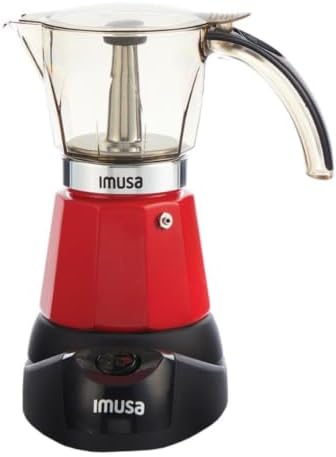
The default recommendation in the category. A six-cup electric moka with a detachable cordless base, keep-warm function, and automatic shutoff, plus a transparent upper chamber so you can watch the brew rise. Owners consistently mention how forgiving it is compared with managing a burner.
💸 Best Budget Pick
A compact electric moka pot with automatic shutoff for buyers who want the convenience without the brand premium. Reviews consistently mention that the basics are covered; the trade-offs to check are gasket availability and how long the keep-warm cycle runs before it cuts out.

⭐ Best Stainless Steel Build
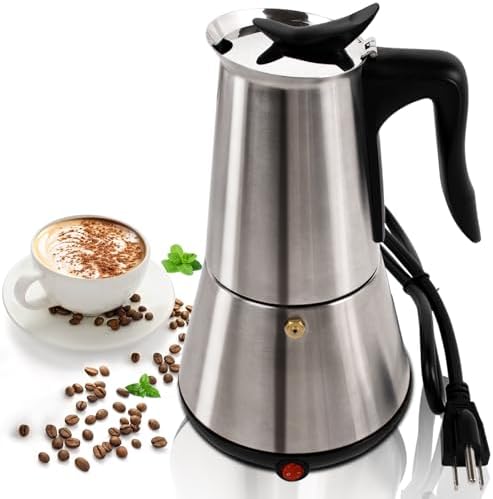
A six cup electric moka in stainless steel rather than aluminum, with a removable base and overheating protection. The pick if you would rather not brew in aluminum and want a body that shrugs off daily handling.
Picks for Solo Drinkers and Shared Kitchens
Capacity is the decision that matters most in this category, because a moka pot cannot be half filled. These two cover the ends of the range.
👤 Best for One or Two Cups
A three-cup electric moka fills roughly one decent mug and comes up to temperature faster than the larger models. The right choice for a single drinker, and it wastes less coffee than repeatedly underfilling a six-cup pot, which never brews properly anyway.

🏢 Best for Offices, Dorms, and RVs
Where there is an outlet but no burner, a cordless electric moka pot with a swivel base is the whole point of the category. Look for automatic shutoff, a base that stays cool, and a carafe you can carry away from the plug without dripping.

Getting a Good Cup Out of an Electric Moka Pot
The brewing fundamentals are identical to the stovetop version. Grind fine but a step coarser than espresso, fill the basket level without tamping, and keep the water below the safety valve. The main adjustment is that you cannot modulate heat mid-brew, so grind size does even more of the work than usual: if the coffee comes out harsh, go one step coarser before you change anything else.
Care differs in one important way. The base contains the heating element and must never be immersed, so washing means rinsing the carafe, basket, and boiler by hand and wiping the base. Dry everything before reassembly, store the pot with the top loose so the gasket does not take a permanent set, and replace the gasket when steam starts escaping from the seam. If the plastic upper chamber on some models is a concern for you, our roundup of plastic-free coffee makers covers the all-metal alternatives.
Common Mistakes to Avoid
- Expecting espresso. Low pressure means concentrated coffee, not espresso, no matter what the box says. It is excellent coffee on its own terms.
- Underfilling the pot. A six-cup electric moka brewed with three cups of water extracts badly. Buy the size you drink.
- Tamping the basket. Same rule as stovetop: level the grounds, no pressure.
- Immersing the base. It is an appliance. Wipe it, never soak it.
- Leaving coffee on keep-warm for an hour. Keep-warm holds temperature, it does not preserve flavor. Pour within a few minutes for the best cup.
- Ignoring the gasket. Slow brewing and steam at the seam almost always mean a tired seal, not a broken pot.
Where to Go From Here
If you bought electric to escape an induction cooktop, it is worth knowing the alternative: magnetic stainless stovetop pots work on induction perfectly well, and our induction moka pot guide compares that route with adapter plates. If you want to know what the classic version is like before committing to a plug, our Bialetti Moka Express review covers the original in detail. And once the pot is brewing well, the best thing to do with those first concentrated drops is the whipped sugar espuma in our Cuban coffee guide.
Frequently Asked Questions
Does an electric moka pot make real espresso? No. It brews at roughly one to two bar, well below the pressure a pump espresso machine uses. The result is concentrated coffee that works well with milk, not a true espresso shot.
Is an electric moka pot better than a stovetop one? It is more convenient and safer to forget about; a stovetop pot gives more control and has nothing electrical to fail. Choose based on your cooktop and your patience, not on cup quality.
Can I use an electric moka pot without a stove at all? Yes, that is its main advantage. It needs only an outlet, which makes it a good fit for offices, dorm rooms, and travel setups.
What grind should I use? Fine, but a step coarser than an espresso grind. Preground Spanish-style or Italian-style espresso coffee usually works straight from the package.
How do I clean it? Rinse the carafe, basket, and boiler by hand and dry them; never immerse the electric base. Keep a spare gasket on hand and swap it when the seal starts leaking steam.
The Bottom Line
An electric moka pot is the answer when there is no burner to use, or when you want the pot to stop itself. A six cup model with a cordless base and a shutoff is the safe default, a small three-cup model suits solo drinkers better than underfilling a big one, and a stainless body is there if you would rather not brew in aluminum. Just buy it knowing it makes strong coffee, not espresso.