Last updated: August 12, 2026
Putting a moka pot on an induction stove fails for most people on the first try, and the reason is physics rather than technique. Induction hobs heat by inducing a current in magnetic metal, and the classic Bialetti is cast aluminum, which is not magnetic. The pot sits there, the hob beeps or shows an error, and nothing happens. No setting fixes it.
There are two real solutions: buy a moka pot with a magnetic stainless base, or put an induction adapter disk under the aluminum pot you already own. This guide covers both, plus the trap that catches even people who buy the right pot, which is the minimum pan size most induction hobs require before they will switch on at all.
This article contains affiliate links. If you buy through them, we may earn a commission at no extra cost to you. Learn more.
Quick Answer
Which moka pot works on an induction cooktop?
- Any moka pot with a magnetic base, which in practice means a stainless steel model such as the Bialetti Venus, or one of Bialetti’s two-tone pots with a steel bottom.
- Aluminum pots including the classic Moka Express will not work at all. An induction adapter disk is the only way to keep using one.
- Check the size as well as the metal: many hobs need a base of roughly four to five inches before they will detect a pan, so very small moka pots may need an adapter regardless.
What Makes a Moka Pot Induction Compatible
Four checks decide whether a given pot will actually brew on your hob. Run them in this order and you will not be disappointed by a delivery.
| What to check | Why it matters | What to look for |
|---|---|---|
| Magnetic base | Induction only heats ferrous metal, so aluminum simply does not respond | Stainless steel construction or a stated induction-compatible steel base plate |
| Base diameter | Hobs have a minimum detectable pan size and will not switch on below it | Larger pots, typically four cups and up, or an adapter disk for small ones |
| Base flatness | Induction needs full contact for even, efficient heating | A flat, encapsulated base rather than a rounded or ridged bottom |
| Heat control | Induction ramps up fast, and moka pots want gentle heat | A hob with fine low-power steps, or a habit of using the lowest settings |
| Handle position | Induction surfaces stay cooler, but the pot itself gets hot fast | A handle well clear of the base, in heat-resistant material |
| Gasket access | Every moka pot needs a new seal eventually | Confirm replacement gaskets are sold for the exact model and size |
The fastest test for any pot you already own takes one second: hold a fridge magnet to the bottom. If it grabs, the hob can heat it. If it slides off, no setting on the cooktop will change that.
The Minimum Pan Size Problem
This is the surprise that catches careful buyers. Induction hobs detect cookware by size as well as by material, and many require a base somewhere in the range of four to five inches across before the element switches on. A one, two, or three cup moka pot has a small footprint, so even a perfectly magnetic stainless mini pot can leave the hob flashing an error.
Two practical responses. The first is to size up: a four or six cup pot usually has enough base diameter to be detected, and since moka pots have to be brewed full anyway, buying the size you actually drink was always the right move. The second is an adapter disk, which presents a large ferrous surface to the hob and conducts that heat up into whatever sits on it. Some newer hobs also include a small-pan or flexible zone setting, so it is worth checking your manual before assuming the worst.
Our Top Picks at a Glance
How we chose: we compared widely available moka pots on base material and magnetism, base diameter, build quality, spare-part availability, and the induction-specific complaints and praise that repeat across owner reviews. Selections rest on manufacturer specifications and published product information rather than any hands-on trial of our own.
One reassurance before the list: none of these require an adapter on a standard hob, though the smallest sizes of any moka pot can still run into the minimum-detection issue described above.
🏆 Best Overall
Bialetti’s stainless workhorse is the straightforward answer for induction kitchens: 18/10 steel throughout, a flat magnetic base, and an ergonomic handle, from the company that invented the category. Owners consistently mention it as the pot they bought after discovering their aluminum one was useless on the new stove.

🎩 Best Classic Look on Induction
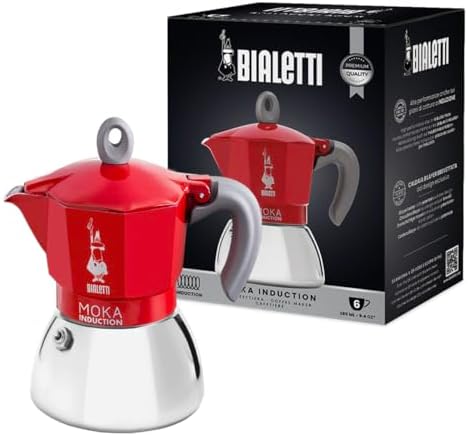
For buyers who want the faceted heritage silhouette rather than a smooth modern one, Bialetti also builds induction-ready versions that pair a steel base with the traditional shape. The compromise pick if the look of the original matters to you as much as the coffee.
⭐ Upgrade Pick
Heavier 18/10 stainless with a thick encapsulated base, which is exactly what induction rewards: full contact, even heat, and no hot spot in the middle. Backed by an unusually long warranty for a stovetop brewer, which makes it a realistic buy-once purchase.

Budget Option and How to Keep Your Aluminum Pot
Not everyone needs a new pot, and not everyone wants to spend on one. These two cover the cheaper routes onto an induction hob.
💸 Best Budget Pick
A plain stainless stovetop espresso maker with a magnetic base does the job without a brand premium. Reviews consistently mention decent everyday performance; the things to verify on any budget model are base flatness and whether replacement gaskets are sold separately.

🔌 Keep the Pot You Already Own
An induction interface disk is a flat ferrous plate that sits between the hob and the pot, letting an aluminum Moka Express work on induction. It heats less efficiently and adds a preheating step, but it costs a fraction of a new pot and doubles as a way to use small pans on a large zone.

Brewing on Induction Without Scorching the Coffee
Induction is fast, and speed is not a moka pot’s friend. On gas the flame heats the base gradually; on induction the same base can reach brewing temperature dramatically quicker, which pushes the pot toward a violent sputter and a bitter finish. The widely recommended approach is to use a low power setting, roughly the bottom third of your hob’s range, and to expect the brew to take about as long as it did on gas. If it is done in ninety seconds, the setting is too high.
Two other habits help. Starting with hot water in the boiler shortens the time the grounds spend heating and is a common tip for a cleaner cup, though it matters slightly less on a well-controlled induction hob. And pulling the pot off the zone the instant it starts to gurgle is even more important than on gas, because induction elements cut heat immediately but the pot itself stays hot. Grind fine but a step coarser than espresso, fill the basket level, and never tamp.
Common Mistakes to Avoid
- Assuming stainless always means induction ready. Some stainless alloys are not magnetic. Test with a magnet or read the listing carefully.
- Buying a one or two cup pot for an induction hob. The base may be too small for the element to detect. Size up or plan on an adapter.
- Using a high power level. Induction gets there fast, and fast is exactly what makes moka coffee bitter. Stay in the low range.
- Trying to force an aluminum pot. No trick, foil, or setting makes non-magnetic metal work. Only an adapter disk does.
- Leaving the pot on the zone after the gurgle. Residual heat keeps extracting. Lift it off immediately.
- Skipping the gasket check. A tired seal costs you pressure and time on any cooktop, and it is the cheapest part of the pot to replace.
Where to Go From Here
If your reason for shopping is induction specifically, it is worth comparing the whole stainless field rather than only the induction-marketed models; our stainless moka pot guide covers steel grades, gaskets, and sizing in more depth. If you would rather sidestep the cooktop question entirely, an electric moka pot plugs into an outlet and heats itself. And to see exactly what you are giving up by leaving aluminum behind, our Bialetti Moka Express review covers the classic pot honestly, limitations included.
Frequently Asked Questions
Why does my moka pot not work on my induction stove? Almost certainly because it is aluminum, which is not magnetic and therefore invisible to an induction hob. The second possibility is that the base is too small for your hob to detect.
Can I use an adapter plate with a Bialetti Moka Express? Yes. An induction interface disk sits between the hob and the pot and transfers heat conventionally. It is slower and less efficient than a magnetic pot, but it works and costs far less.
How do I know if a moka pot is induction compatible? Hold a magnet against the base. If it sticks firmly, the hob can heat it. Listings usually state it too, but the magnet test is the one that never lies.
What power setting should I use? Low, roughly the bottom third of the range. Induction heats far faster than gas, and rushing a moka pot produces sputtering and a harsh finish.
Is stainless coffee different from aluminum coffee? The differences are small and debated among long-time owners. Stainless heats more slowly and cleans more easily; grind size and heat level affect the cup far more than the metal does.
The Bottom Line
Induction and aluminum are simply incompatible, so an induction moka pot means a stainless one with a magnetic base, such as the Bialetti Venus, or an adapter disk under the pot you already own. Check base diameter as well as material, brew on a low power setting, and lift the pot off at the first gurgle. Get those three right and induction makes a very controllable moka stove.