Last updated: August 12, 2026
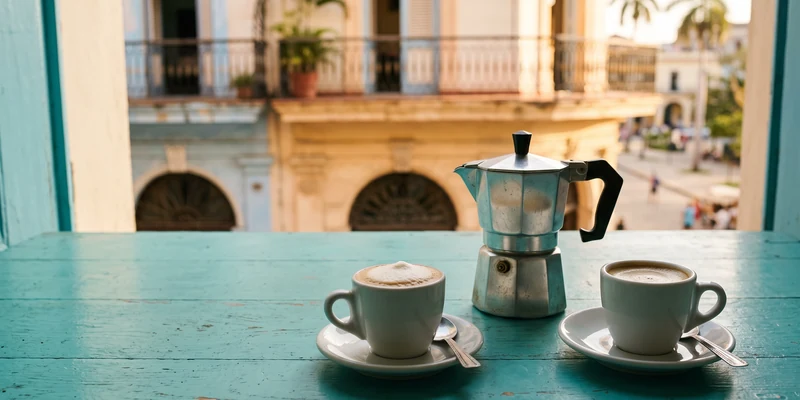
Using a moka pot for Cuban coffee is not a workaround. In Miami kitchens, in Hialeah, in Union City, and across the Cuban diaspora, the little aluminum stovetop pot is the standard tool, usually called simply la cafetera. An espresso machine is optional. What is not optional is the espuma, the pale, whipped sugar foam that turns a bitter shot into a cafecito.
This guide covers the whole ritual: how to whip espuma properly, what grind and coffee to use, why a moka pot suits this drink better than it suits an Americano, and how cafecito, colada, cortadito, and café con leche differ from one another. Get the espuma right and everything else falls into place.
Quick Answer
How do you make Cuban coffee in a moka pot?
- Brew a moka pot with a fine espresso-style grind, then catch the very first dark drops in a cup holding a few spoonfuls of sugar.
- Whip that tiny amount of coffee and sugar hard with a spoon until it turns pale and creamy. That paste is the espuma, and it is the whole trick.
- Pour the rest of the brewed coffee slowly into the espuma, stir, and serve in small demitasse cups. A larger shared pour is a colada, and adding steamed milk makes a cortadito.
Cafecito in a Moka Pot, Step by Step
The method below makes roughly a six-cup moka pot’s worth, which in Cuban terms is several small servings rather than six mugs. Moka pot cup sizes refer to little espresso-style portions, not coffee mugs.
- Fill the boiler with fresh water. Up to just below the safety valve, never over it. Many people start with hot water, which shortens the time the coffee sits over heat and is a widely repeated tip for a cleaner cup.
- Fill the basket with a fine, dark grind. Level it with a finger and do not tamp. A moka pot builds far less pressure than an espresso machine, so a tamped puck can choke it or push water around the edges.
- Assemble and set the heat to medium-low. Screw the top on firmly, using a towel if the boiler is already hot. Leave the lid open so you can see the first coffee arrive.
- Put the sugar in your serving cup. Traditionally a few teaspoons per small serving, in a metal or sturdy cup. Cuban coffee is sweet by design, and the sugar is what makes the foam possible.
- Catch the first drops. The moment the first thick, dark coffee comes up the spout, pour about a teaspoon of it onto the sugar. Those first drops are the most concentrated of the whole brew, which is why they whip well.
- Whip the espuma. Beat the sugar and coffee hard with a spoon, pressing against the side of the cup, until the mixture lightens to the color of caramel and thickens into a paste. This takes a minute or two of real effort.
- Finish the brew and combine. Take the pot off the heat as soon as it starts to sputter and gurgle. Pour the coffee slowly into the espuma while stirring, and a tan foam will rise to the top.
- Serve small. Pour into demitasse cups, called tacitas. A cafecito is meant to be two or three sips, shared, standing up, and finished quickly.
If the pot sputters violently at the end, the heat was too high. Pulling it off at the first gurgle, or resting the base in a little cold water, stops the extraction before the last bitter fraction comes through.
Espuma: The Part That Makes It Cuban
Espuma, or espumita, is whipped sugar. There is no dairy in it and no machine involved. Sugar and a small amount of very concentrated hot coffee, beaten hard, form a thick pale emulsion that floats on the finished drink as a tan crema. Without it you have sweetened stovetop coffee. With it you have cafecito.
Two details decide whether it works. The first is quantity: use only the first spoonful or so of coffee, because more liquid gives you syrup instead of paste. The second is effort. Espuma is beaten, not stirred, and the color change from dark brown to pale caramel is your signal that enough air is in there. Some households use a small hand mixer, which works fine, but the spoon is traditional and takes about ninety seconds.
The Coffee, the Grind, and the Brands
Cuban coffee is a preparation style, not an origin designation. The brands most associated with it in the United States, Café Bustelo, Café Pilon, and Café La Llave, are Spanish-style dark roasts produced in the United States, vacuum-packed as fine espresso grind in the familiar bricks and cans. They are what most Cuban-American households actually reach for, and their fine grind is already the right size for a moka basket straight out of the package.
On grind: fine, but not as fine as a true espresso machine grind. Too fine and a moka pot struggles to push water through, which forces the pressure up and the flavor toward burnt. Too coarse and the brew runs fast and thin. If you grind at home, start just coarser than your espresso setting and adjust based on how the pot runs. Dark roasts suit this drink because the sugar and the small serving size both flatten subtlety, which is the same logic behind the robusta-heavy blends used in Vietnamese coffee.
Cafecito, Colada, Cortadito, Café con Leche
The same base coffee becomes four different social occasions depending on the size of the pour and what goes in it. Knowing which is which makes ordering at a ventanita, the walk-up window found on Calle Ocho and across Miami, much easier.
| Drink | What it is | How it is served |
|---|---|---|
| Cafecito | Sweetened Cuban coffee with espuma, also called café cubano | A single demitasse, drunk in a few sips |
| Colada | The same coffee in a larger shared portion | A foam cup with a stack of tiny plastic cups, meant to be split among coworkers |
| Cortadito | Cafecito cut with milk, often steamed or evaporated | Small cup, roughly half coffee and half milk |
| Café con leche | Mostly hot milk with a shot of Cuban coffee stirred in | A full mug, classically at breakfast with buttered Cuban toast |
| Café Americano | Cuban coffee lengthened with hot water | A larger cup for people who want it long rather than intense |
The colada is the one that surprises visitors most, because it is not a large coffee for one person. It is a portion designed to be poured out into the little cups and handed around an office or a job site. Buying a colada and drinking it alone is technically possible and socially odd.
A Short Note on Where Cuban Coffee Comes From
Coffee has grown in Cuba since the eighteenth century, expanding significantly when French planters arrived from Saint-Domingue after the Haitian Revolution and established plantations in the mountains of the east. The ruins of those estates in the Sierra Maestra region are a UNESCO World Heritage site. Cuban production today is small compared with its historical peak, and because of the United States embargo, most coffee sold under Cuban-style branding in American stores is roasted in the United States from beans grown elsewhere.
That is worth stating plainly, because the drink’s identity does not depend on it. Cafecito is defined by preparation and by ritual, the espuma, the small cup, the shared colada at three in the afternoon, and that tradition has been carried and shaped as much by the Cuban-American communities of South Florida and New Jersey as by the island itself.
Why a Moka Pot Suits This Drink
A moka pot pushes hot water through coffee using steam pressure, generally in the range of one to two bar, which is a small fraction of the roughly nine bar an espresso machine uses. That is why moka coffee is not espresso and why it produces little true crema. For cafecito, that matters less than it would elsewhere, because the crema you see in the cup comes from the whipped espuma rather than from the brewing pressure.
What the moka pot does deliver is concentration, heat, and a small yield, which is exactly what the drink needs. It is also cheap, durable, and stovetop-simple. If you are choosing your first one, the trade-offs between aluminum and stainless are covered in our stainless steel moka pot guide, and the classic aluminum original gets the full treatment in our Bialetti Moka Express review.
Common Mistakes to Avoid
- Whipping the espuma with too much coffee. One teaspoon of the first drops, no more. Extra liquid gives you syrup that never lightens.
- Tamping the basket. A moka pot is not a portafilter. Level the grounds and leave them loose.
- Brewing on high heat. High heat produces a violent sputter and a scorched finish. Medium-low, and off the burner at the first gurgle.
- Overfilling the boiler. Water must stay below the safety valve. That valve is a safety device, not a fill line.
- Using a coarse grind. Cuban coffee is fine-ground and dark. Drip grind runs through too fast and tastes thin under all that sugar.
- Washing the pot with soap every time. Most owners rinse with hot water and dry thoroughly. Aluminum in particular reacts poorly to detergent and dishwashers.
Where to Go From Here
If the moka pot is new to you, it is worth understanding how it differs from the other stovetop-simple brewer in most kitchens; our moka pot versus French press comparison covers grind, body, and which one suits which morning. If you are shopping for a pot and your kitchen has an induction cooktop, aluminum will not work on it at all, which is the whole subject of our induction moka pot guide. And if you enjoy small, sweet, intense coffee traditions, the condensed milk drinks in our Vietnamese coffee guide come from a very different place and land in a similar spot.
Frequently Asked Questions
Is Cuban coffee the same as espresso? No. Cuban coffee is a preparation: a small, dark, heavily sweetened shot topped with whipped sugar espuma. It is often made with espresso, but a moka pot is the traditional home tool and does not brew true espresso.
How much sugar goes in a cafecito? More than most people expect, commonly a couple of teaspoons per small serving. The sugar is structural, not just sweetening, because without it there is no espuma.
What coffee should I use? A fine-ground dark Spanish-style roast such as Café Bustelo, Pilon, or La Llave is the standard choice, and the grind in those packages is already right for a moka basket.
Can I make espuma with an espresso machine instead? Yes. Use the first few drops of the shot with your sugar exactly the same way. The moka pot is traditional at home, not required.
What is a colada? A larger portion of the same sweetened coffee, served in a foam cup with a stack of small plastic cups. It is meant for sharing, which is why it arrives with enough cups for the room.
The Bottom Line
Cuban coffee in a moka pot comes down to one move: catch the first dark drops, beat them into sugar until the paste turns pale, then pour the rest of the brew in. Use a fine dark grind, keep the heat medium-low, and serve it small. The pot is ordinary equipment; the espuma is what makes it a cafecito.