Last updated: August 5, 2026
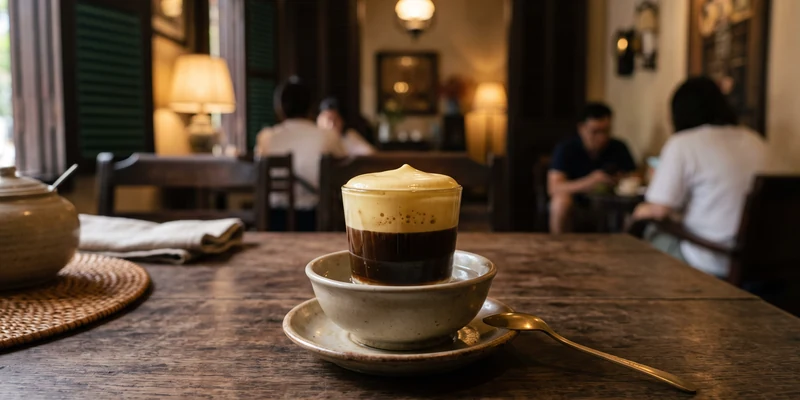
Hearing about Vietnamese egg coffee for the first time usually produces the same reaction: egg, in coffee? The name is literal, but the picture most people form is wrong. Cà phê trứng is not a raw egg cracked into a mug. It is a whipped cream of egg yolk and sweetened condensed milk, beaten until it turns pale and thick like zabaglione, then floated on a small glass of strong phin coffee. You eat the top half with a spoon and drink the bottom half.
This guide covers what the drink actually is, where it came from, how cafes in Hanoi build it, and how to approximate it in a home kitchen. It also covers the practical questions, including the raw yolk one, without pretending the answer is simpler than it is.
Quick Answer
What is Vietnamese egg coffee?
- Cà phê trứng is strong Vietnamese phin coffee topped with egg yolk whipped together with sweetened condensed milk into a thick, custard-like foam.
- It is a Hanoi specialty, widely credited to Nguyen Van Giang, who created it in the 1940s when fresh milk was hard to get.
- It tastes far more like tiramisu or eggnog than like eggs, and it is usually served in a small glass sitting in a bowl of hot water to keep it warm.
How Egg Coffee Is Made, Step by Step
Every cafe guards its own ratio, but the shape of the method is consistent: brew strong coffee, whip the yolk cream separately, then combine them at the last moment so the layers stay distinct.
- Brew a small, strong coffee. A single phin of dark robusta or a robusta-heavy blend, roughly two to three tablespoons of medium-coarse grounds, dripped for four to five minutes. Egg coffee needs a bitter, concentrated base, because the cream on top is very sweet. Our Vietnamese coffee recipe walks through the phin brew in detail.
- Separate the yolks. One or two yolks per drink, whites discarded or saved for something else. The whites make the foam airy and eggy in the wrong way, which is why they are left out.
- Whip the yolk with sweetened condensed milk. Roughly one to two tablespoons of condensed milk per yolk. Beat hard with a whisk, a milk frother, or a hand mixer until the mixture roughly doubles, turns pale yellow, and holds a soft ribbon. This takes a few minutes by hand and under a minute with a mixer.
- Warm it gently if you want it thicker. Many recipes whip the yolk mixture over a bowl of hot water, the same way a zabaglione is made. The gentle heat thickens the cream and takes the raw edge off the yolk. Keep it well below a simmer so the egg does not scramble.
- Pour and float. Put the hot coffee in a small glass, sometimes over a spoonful of condensed milk, then spoon the cream on top so it sits as a distinct layer rather than mixing in.
- Serve it in a hot water bath. Hanoi cafes stand the glass in a small bowl of hot water. Egg coffee cools fast, and cold yolk cream is not pleasant.
Iced egg coffee exists too, especially in the south and in tourist-facing cafes, and it is served in a taller glass over ice with the cream on top. Traditionalists in Hanoi generally consider the hot version the real one.
Where Egg Coffee Came From
The drink is tied to one man and one shortage. Nguyen Van Giang was working as a bartender at what is now the Sofitel Legend Metropole in Hanoi in the 1940s, at a time when fresh milk was scarce and expensive. The widely told account is that he substituted whipped egg yolk for milk in a coffee, and the result was popular enough that he later opened his own cafe. Cafe Giang still operates in Hanoi, run by the family, and remains the address most associated with the drink.
From there it spread across Hanoi and became a fixture of the city’s cafe culture, usually served in the small upstairs rooms and alley cafes the Old Quarter is known for. It is worth being precise about geography: egg coffee is a northern, Hanoi-centered tradition rather than a nationwide default. In Ho Chi Minh City you can find it, but the everyday order is cà phê sữa đá.
What It Actually Tastes Like
Expect dessert. The cream is sweet, dense, and vanilla-adjacent, with the faint richness that egg yolk gives to custard, and most first-timers reach for comparisons like tiramisu, eggnog, or the top of a creme brulee. Underneath it, the coffee is deliberately bitter and dark, which is the whole balance of the drink: the bitterness cuts the sweetness, and neither half works alone.
Texture matters as much as flavor. A properly whipped cream is thick enough to hold a spoon mark for a second before it settles, closer to a soft mousse than to whipped dairy cream. If the cream is thin, it sinks into the coffee and the drink turns into a muddy sweet latte, which is the most common way a home attempt goes wrong.
Cafe Versions and Home Versions
Recipes vary, and the variables are few enough to list. Knowing which lever does what makes it easier to adjust your own version toward the cup you want.
| Variable | Common approaches | What it changes |
|---|---|---|
| Egg | Yolk only, occasionally yolk plus a little white | Yolk alone gives richness; whites add volume and a more eggy aroma |
| Sweetener | Sweetened condensed milk, sometimes plus a little sugar | Condensed milk carries both sweetness and body, so it is hard to replace |
| Heat | Whipped cold, or whipped over a hot water bath | Gentle warmth thickens the cream and softens the raw yolk character |
| Flavoring | A drop of vanilla, sometimes butter or cheese in modern cafes | Purists skip it; newer Hanoi cafes treat it as a signature |
| Coffee base | Phin-brewed robusta blend, occasionally espresso | The base must be bitter and concentrated or the drink turns cloying |
| Service | Small glass in a bowl of hot water, or iced in a tall glass | Hot is traditional in Hanoi; iced is common in the south and abroad |
At home, the two pieces of equipment that matter most are something to whip with and something to brew a properly strong base. A handheld milk frother does the cream well, and a phin does the coffee; if you do not have one, our guide to Vietnamese coffee beans covers what to buy first, since the bean does more work here than the brewer.
About the Raw Yolk
Traditional egg coffee uses raw yolk, whipped rather than cooked, and that is worth stating plainly rather than glossing over. Home cooks who prefer to avoid raw egg have two straightforward options: use pasteurized eggs, which are sold in most American supermarkets and behave identically in the whisk, or whip the yolk mixture over a hot water bath until it thickens, which is standard practice in many recipes anyway. Neither changes the flavor much. As with any raw or lightly cooked egg preparation, follow the food safety guidance you would normally apply in your kitchen.
Common Mistakes to Avoid
- Using the whole egg. The white is what makes a home version smell like breakfast. Yolks only.
- Under-whipping. Stop too early and the cream sinks. Beat until it pales and visibly thickens, which is longer than most people expect by hand.
- Overheating the mixture. A hot water bath should be warm, not simmering. Direct heat scrambles the yolk in seconds.
- Brewing a mild base. A light arabica drip coffee disappears completely under the cream. Go dark, concentrated, and small.
- Serving it in a big mug. Egg coffee is a small drink for a reason. A full mug is overwhelming and goes cold before you finish.
- Stirring it immediately. The layers are the experience. Spoon the top, then let the last of the cream fall into the coffee as you drink.
Where to Go From Here
Egg coffee is one branch of a bigger tradition, and the rest of it is easier to make on a Tuesday morning. The everyday drink is cà phê sữa đá, covered step by step in our how to make Vietnamese coffee at home guide, and the fastest possible version lives in the 3-in-1 sachets in our instant Vietnamese coffee roundup. If you like the idea of a small, intense, milk-friendly coffee but want a different route to it, the whipped-sugar espuma in Cuban coffee made in a moka pot uses a similar trick with sugar instead of yolk.
Frequently Asked Questions
Does Vietnamese egg coffee taste like eggs? Not really. Whipped yolk and condensed milk taste like sweet custard, and most people compare the flavor to tiramisu or eggnog rather than to anything savory.
Who invented egg coffee? It is widely credited to Nguyen Van Giang in Hanoi in the 1940s, created as a substitute when fresh milk was scarce. His family’s Cafe Giang is still the best-known place to drink it.
Can I make egg coffee without a phin? Yes. Any strong, concentrated brew works as the base, including espresso or a moka pot. The cream matters more than the brewer, though a phin gives the most traditional result.
Is the egg raw? Traditionally yes, whipped rather than cooked. Pasteurized eggs or whipping over a hot water bath are the usual ways home cooks handle that, with almost no difference in taste.
Hot or iced? Hot is the Hanoi standard, served in a small glass set in a bowl of hot water. Iced versions are common in southern Vietnam and abroad and are perfectly legitimate, just newer.
The Bottom Line
Vietnamese egg coffee is whipped egg yolk and sweetened condensed milk floated on a small glass of strong phin coffee, a Hanoi invention born from a milk shortage in the 1940s. Whip the yolk cream until it pales and thickens, brew the base darker and smaller than feels sensible, and serve it hot. Done right, it is closer to dessert than to a morning coffee, and that is exactly the point.