Last updated: June 11, 2026
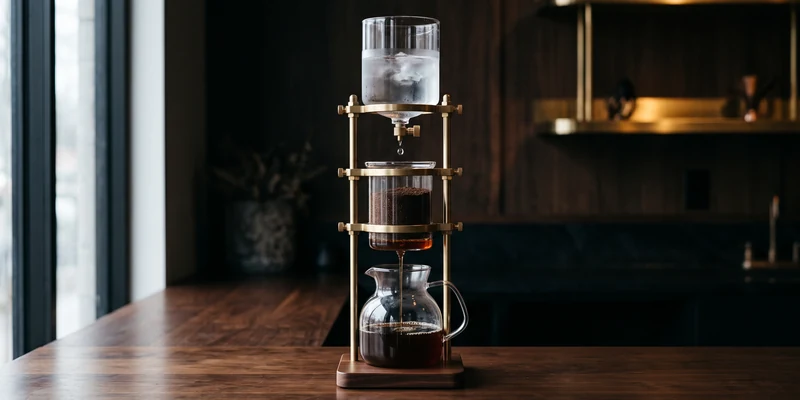
A cold brew coffee maker with a drip tower is a different animal from the jug of grounds in your fridge. Instead of soaking the coffee, a tower lets cold water fall through the bed one drop at a time, usually near one drop per second, into a carafe below. That is percolation, not immersion, and the cup is generally described as lighter, clearer, and more aromatic.
It is also the fussier path. Glass towers are fragile, the valve needs adjusting, and one run yields a modest amount over several hours. This guide covers what separates a good tower from a merely photogenic one. If you mainly want a fridge full of cold coffee, read the cold brew coffee maker guide instead.
This article contains affiliate links. If you buy through them, we may earn a commission at no extra cost to you. Learn more.
Quick Answer
Which cold drip coffee tower should you buy?
- For most buyers: a glass tower in a wooden frame, six to eight cups per run, with an adjustable valve.
- To try the method first: a compact three to four cup tower on a metal stand.
- If dialing in the drip rate is the appeal: Hario and Yama are the established names here.
What to Check Before You Buy a Cold Drip Tower
Four things decide whether you keep using a tower: how much one run makes, how precisely the valve controls the drip, how stable the frame is, and how easily it comes apart. Most of the rest is styling.
| What to check | Why it matters | What to look for |
|---|---|---|
| Capacity per run | A run takes hours, so capacity sets your routine | Three to four cups for one drinker, six to eight for a few days |
| Drip valve control | The valve is the method; a vague one cannot hold a rate | A metal or glass stopcock with smooth action, not a switch |
| Frame stability | A tall tower full of water is top heavy, and glass does not survive tipping | Wide weighted base, snug frame, cork or rubber contact points |
| Glass type | Thin decorative glass chips at the joints | Borosilicate chambers that lift out rather than wedge in |
| Filter type | Decides clarity, body, and cleanup | Paper for the cleanest cup, metal mesh for more body, cloth in between |
| Footprint and height | Many towers do not fit under a kitchen cabinet | Measure your clearance before ordering |
| Cleaning | Oils and fines build up in the valve and drip tube | Few parts, no glued joints, a valve you can flush or unscrew |
If a listing will not state capacity or describe the valve, treat that as a signal.
Cold Drip Is Not Cold Brew, and the Difference Is the Point
Both use cold water, and that is where the similarity ends. In immersion brewing the coffee sits in the water for a long stretch, commonly 12 to 24 hours, so every ground meets the same liquid throughout. That is forgiving: an off grind or an extra hour still lands somewhere reasonable and heavy bodied.
Cold drip works the other way. Water passes through the bed once and never returns, so extraction is gentler and far more sensitive to grind and flow. The result is generally described as clearer, closer to iced tea than to syrupy concentrate.
Percolation versus immersion in practice
This is the same split that separates pour over from French press, moved into cold water: percolation gives control and clarity, immersion gives forgiveness and body. Our pour over coffee maker guide covers the hot version.
One consequence matters at the cup. Immersion cold brew is often made as a concentrate, commonly around 1:4 to 1:8 by weight, then diluted. A tower is usually run at ready to drink strength, closer to 1:8 to 1:12, and goes straight over ice.
Grind, Bloom, and Drip Rate: The Three Dials That Matter
Get these three right and almost any decent tower makes good coffee. Get them wrong and the prettiest tower produces something thin and sour. They interact, so treat them as one system.
Grind a little finer than you would for a jug
Immersion cold brew is commonly ground coarse to extra coarse because it soaks for hours. In a tower the water passes once, so most people land on medium coarse, finer than jug cold brew but short of pour over. Consistency matters more than the exact setting, because fines clog the bed and cause stalling or channeling. Our guide to the best coffee grinders for cold brew explains what to look for.
Wet the bed, then set the rate
Before opening the valve, dampen the grounds and let them settle flat. A dry bed lets the first drops carve a channel down the side of the filter, and water keeps taking that path. Then set roughly one drop per second and check again after ten minutes, because valves drift as the water level above drops. Total run time generally lands between three and eight hours.
Our Top Picks at a Glance
How we chose: this segment is full of small brands and rotating listings, so we sorted by the attributes that separate satisfied owners from frustrated ones: valve quality, frame stability, borosilicate glass, and simple disassembly. Where a model has a track record we name it; otherwise we describe the type.
All of these brew the same way, so the choice is about size and build.
🏆 Best Overall
The classic configuration: glass chambers in a wooden frame, roughly six to eight cups per run, with an adjustable valve that holds a steady drip. Enough capacity to justify the setup time, and the frame absorbs wobble that plagues thin metal stands.

💰 Best Budget Pick
A compact 600 ml tower on a metal stand, for trying the method before dedicating a shelf to it. Shorter runs, faster cleanup, and a footprint that fits most counters.

🔬 Best for Precision
Hario’s slow drip water dripper is the reference point here, and the valve action is what owners praise most. The choice if dialing in the rate is the appeal, not the chore.

Who a Cold Drip Tower Is Actually For
Buy a tower if you enjoy the process, want a clearer and more aromatic cold cup, and are happy making modest batches. Skip it if your goal is cold coffee on tap with minimal effort.
The downsides are real: a tower is partly a display object, glass chips, tall frames are awkward to store, and cleaning takes longer than rinsing a jug. If that reads as a chore rather than a ritual, an immersion brewer like the one in our Hario Mizudashi review asks far less of you.
One More Tower Worth Considering
If you would rather buy a name than a rotating listing, one more tower is worth a look. Yama has been in this category long enough to sit alongside Hario as a reference point.
⭐ Also Great
A Yama tower in the classic configuration: glass chambers in a curved wooden frame, roughly six to eight cups per run, with the slow drip valve the brand is known for. The pick if you would rather have a recognisable name than the cheapest listing.

On filters: paper is clearest and holds back more oils, metal mesh lets through more body and fine sediment, and cloth sits between the two but needs careful storage. Cloth is the traditional immersion choice too, as our Toddy cold brew system review covers.
How to Run Your First Batch
Weigh, wet, set the drip, walk away. Skipping the wetting step is the usual reason a first batch disappoints.
- Weigh coffee and water. Ready to drink strength sits around 1:8 to 1:12 by weight, and a coffee scale beats scoops.
- Grind medium coarse and level the bed. Tap the chamber flat, then add the filter disc if yours includes one.
- Pre wet the grounds. Just enough water to darken the bed, then a minute to settle.
- Set roughly one drop per second. Count it for fifteen seconds instead of eyeballing it.
- Recheck after ten minutes. Valves drift, and one early adjustment saves the batch.
- Rest it before drinking. Many find the flavor rounds out after a few hours in the fridge.
Common Mistakes to Avoid
- Using your jug cold brew grind. Extra coarse grounds let water race through without extracting much. Go a step finer.
- Skipping the pre wet. Dry grounds channel, and once a channel forms the rest of the bed barely brews.
- Setting the drip and never checking it. Rates drift as the chamber empties, and one check ten minutes in catches it.
- Buying capacity you will not use. Bigger towers mean longer runs and more cleanup. Match the size to two or three days of drinking.
- Treating it as low maintenance. The valve and drip tube trap oils, and a neglected tower tastes dull. Flush the valve after every batch.
Where to Go From Here
If this reads as more ritual than you want, our roundup of the best cold brew coffee makers compares pitchers, filter systems, and cloth brewers. If you are keeping the tower plan, grinding is the highest leverage next purchase: a uniform medium coarse grind fixes more than any hardware upgrade.
Frequently Asked Questions
How long does a cold drip tower take? Typically three to eight hours, depending on batch size and valve setting. That is shorter than the 12 to 24 hours immersion commonly needs, though many people still rest the coffee before drinking.
Does cold drip taste different from regular cold brew? Generally yes. Because water passes through once instead of soaking, the result is usually described as clearer, lighter in body, and more aromatic, while immersion tends toward a heavier cup.
What grind size should I use in a drip tower? Medium coarse is the common recommendation, slightly finer than the coarse to extra coarse used for immersion. Uniformity matters more than the dial number, which is why grinder quality shows here.
Is a cold drip tower worth it? If you enjoy the process and like a clearer cup, it is rewarding. If you want volume with minimal effort, an immersion cold brew maker is the better tool.
Which brands make cold drip towers? Hario and Yama come up most often, alongside smaller makers selling similar glass and wood designs. Judge those on valve quality, glass, and frame stability, not the name.
The Bottom Line
A cold drip tower makes a clearer, more aromatic cold coffee than a jug, and asks for grind control, a steady valve, and patience in return. Buy one because the slow drip appeals to you, not because you need cold coffee on tap. Judge any tower on the valve, the glass, and the base before the photo.